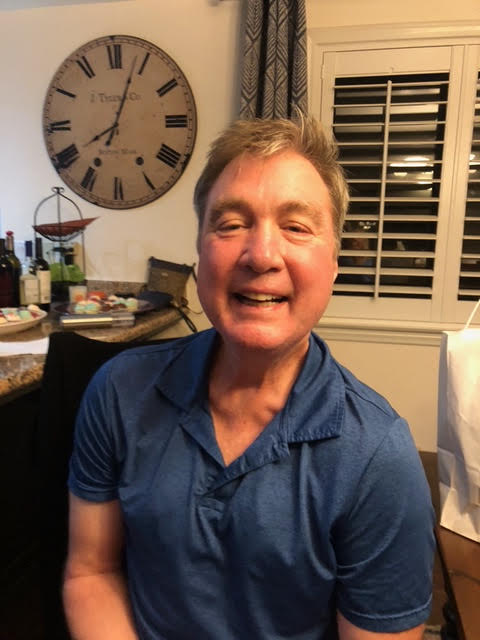
An interview with Tommy Burke, NEVER GIVE UP AND NEVER GIVE IN
Please tell me a little about your background.
I grew up near Boston and got into the film business by accident. I moved to Los Angeles 33 years ago and spent decades working in film and television. I’m also a cancer survivor of 30 years, and I’ve been living with Parkinson’s for the past 8 years.
Can you tell me more about your advocacy?
I’ll be honest—I’m starting to get frustrated with many Parkinson’s organizations. I’m currently researching how I can take a more aggressive, more urgent approach to this cause. Because if I hear “the cure is five years away” one more time…
What is your passion and how did you get involved in Parkinson’s awareness and hope for a cure?
I like to say I got involved in Parkinson’s the same way JFK became a war hero:
JFK: “I had no choice—they sunk my boat.”
Me: “I had no choice—I got Parkinson’s.”
But now that I’m here, I’m not going quietly. I plan to be more vocal—more militant—about pushing for real progress.
What type of goals do individuals with Parkinson’s have when working with you?
Two things: find a cure and never give up.
What type of training do you offer and how long are the programs?
I wrote a book, Not Just Sunglasses and Autographs. Toward the end, I talk about my experience with Parkinson’s and what I’ve learned living with it.
What effect can your advocacy have on an individual with Parkinson’s?
I’m adamant about one thing: movement matters. I push people to work out, stay active, and fight back physically every day.
What would you like to see as a future goal for your advocacy?
To see myself—and everyone else—without this disease.
What events do you participate in?
My focus is daily: doing everything I can to keep this illness from getting worse.
How does this also assist caregivers?
I stay as independent as possible. I keep myself busy and proactive so I don’t have to rely heavily on a caregiver.
How can someone get in touch? What is your website?
How can others also become advocates for awareness?
By creating urgency. This disease needs more pressure, more attention, and more action—now.
If you could add any questions to this interview, what should people be asking?
Why isn’t there more urgency around finding a cure?
In your opinion, what is the key to effective advocacy?
Relentlessness. Refusing to accept delays, excuses, or complacency.
How can we better fundraise to support a cure for Parkinson’s?
By making it immediate and real—people need to understand what’s at stake and why waiting isn’t acceptable.
What other activities do you undertake to improve and support your daily living (e.g., exercise or alternative remedies)?
Daily exercise, staying mentally engaged, and constantly looking for ways to push back against the disease—physically and mentally.
In your opinion, what is the key to effective advocacy?
Taking some old-school protest tactics, updating them, and giving them a modern edge. It’s about creating visibility, urgency, and pressure that can’t be ignored.
How can we better fundraise to support a cure for Parkinson’s?
By being relentless—demanding attention, pushing hard, and not backing down until real money and real commitment show up. Sometimes you have to be a pain in the ass to get results.
What other activities do you undertake to help improve and support your daily living (e.g., exercise or alternative remedies)?
I work out most days—often twice a day. Staying physically active is non-negotiable for me. I’m also curious about alternative approaches and continue to look into what emerging treatments might have to offer.
_______________________________
TogetherForSharon® In memory of my mother, Sharon to voice awareness & hope for a Parkinson’s Disease cure. Sharon’s Son, George
Support https://www.togetherforsharon.com/shop/
Would you like to share your journey! Reach out and together our Voices are so much STRONGER!