
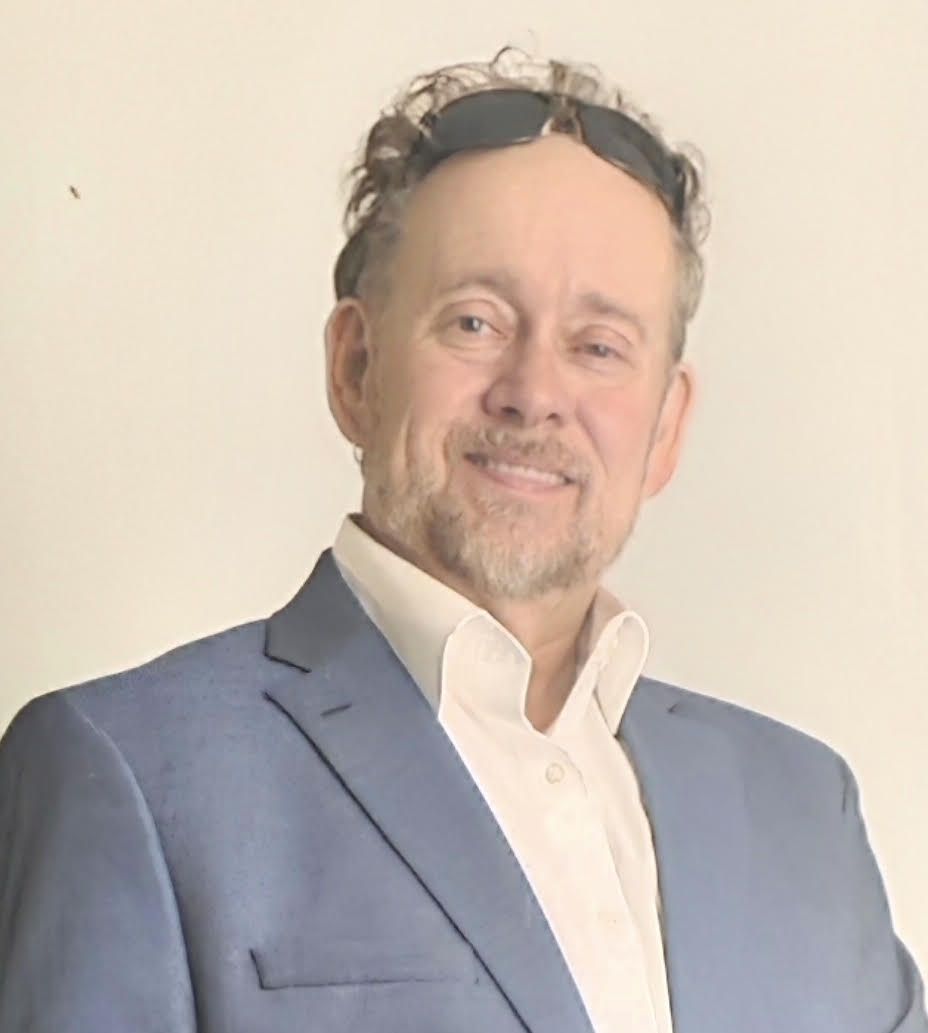
An interview with Rich Pikunis, Laugh Through It: The Unshaken Truth About Parkinson’s
Biography
I’m Richie Pikunis—attorney turned storyteller, speaker, author, and Parkinson’s advocate. I was diagnosed with Young-Onset Parkinson’s at age 24 and have now lived with the disease for 35 years. In 2018, I underwent Deep Brain Stimulation (DBS), and in May of 2025, after starting Vyalev, I was able to completely turn my DBS off and discontinue all other Parkinson’s medications, including high-dose Rytary, ropinirole, amantadine, Inbrija, and Nourianz. I am also the author of multiple books on Amazon, including Shaky Times and Laugh Through It, where I share the realities of living with Parkinson’s through storytelling and humor.
Please tell me a little about your background.
Before my diagnosis, I served as a volunteer firefighter, which taught me early on how to face high-pressure situations and show up when it mattered most. I was diagnosed with Parkinson’s at age 24 while in law school, and my life since has been defined by adapting, rebuilding, and eventually using my experience to help others. In 2000, I testified before the United States Senate at the invitation of Senator Arlen Specter, advocating for Parkinson’s awareness and research funding—on the same committee that Michael J. Fox would testify before a year later. We also happen to share the same birthday—June 9th—he’s just a few years ahead of me.
Can you tell me more about your Advocacy?
My advocacy focuses on making Parkinson’s real, relatable, and impossible to ignore. It’s grounded in lived experience—from decades of navigating treatment to undergoing DBS and later transitioning off it with new therapy. I’ve taken that experience from the personal level to national platforms, including Senate testimony, keynote presentations for major pharmaceutical organizations, and ongoing work creating content that shows what this disease actually feels like from the inside.
What is your passion and how did you get involved in Parkinson’s awareness and hope for a cure?
My passion is helping people feel less alone in something that can be incredibly isolating. Living with Parkinson’s for over three decades forced me to understand it in a way that textbooks can’t, and I felt a responsibility to translate that into something others could use.
What type of goals do individuals with Parkinson’s have when seeing your Advocacy?
Most people walk away with a shift in mindset—they stop seeing themselves as broken and start seeing themselves as still capable. The goal isn’t perfection, it’s learning how to live anyway, even when the disease keeps changing the rules.
What type of training and how long are the programs?
I will soon be offering workshops and programs centered around storytelling, resilience, and humor as coping tools. They range from short sessions to multi-day immersive experiences depending on the audience.
What effect can your Advocacy have on an individual with Parkinson’s?
It gives people permission to be honest, to adapt, and to find strength in their own experience. When someone sees what’s possible after decades with the disease, it changes how they view their own path.
What would you like to see as a future goal for your Advocacy?
I want to expand this into a global platform that reaches patients, caregivers, medical professionals, and industry leaders—helping bridge the gap between lived experience and the decisions that shape treatment and care.
What events do you participate in?
I participate in speaking engagements, awareness campaigns, support communities, and educational events focused on Parkinson’s and chronic illness. My work ranges from grassroots advocacy to national platforms, including testifying before the U.S. Senate and delivering keynote presentations for major organizations within the Parkinson’s field.
How does this also assist the caregivers?
Caregivers often carry as much weight as the patient, and my work acknowledges that. It gives them understanding, language, and moments of relief in a role that rarely gets recognized.
How can someone get in touch? What is your website?
You can find me at www.voiceunshaken.com and through my platform www.richiepikunis.com
@parkycomic
@VoiceUnshaken
How can others also become advocates for awareness?
Start by telling the truth about your experience. Advocacy doesn’t start with a title—it starts with honesty.
In your opinion, what is the key to effective advocacy?
Clarity and connection. If people have to work to understand you, they won’t act.
How can we better fundraise to support a cure for Parkinson’s?
By making people feel the urgency. Facts inform, but emotion drives action.
What other activities do you undertake to help improve and support your daily living Eg exercise and alternative remedies?
I focus on movement, mindset, and routine—exercise, humor, and mental engagement are essential to how I manage daily life.
Why should people who don’t have Parkinson’s care about this?
Because Parkinson’s affects far more than the individual—it impacts families, caregivers, and entire systems. This is not a distant issue.
Have you had any family members or relatives affected by Parkinson’s disease?
No, I’m the one who introduced it to the family, which made the learning curve steep for everyone.
If you had one song that would tell us more about you or represent your life, which song would it be?
“I Won’t Back Down” by Tom Petty & The Heartbreakers—because no matter what Parkinson’s has taken, I’m still here, still pushing forward, and not going anywhere.
If you had one final statement or quote you could leave for the Parkinson’s community, what would it be?
You’re not broken—you’re adapting to something incredibly difficult, and that still counts as strength.
_________________________________________________
TogetherForSharon® In memory of my mother, Sharon to voice awareness & hope for a Parkinson’s Disease cure. Sharon’s Son, George
Support https://www.togetherforsharon.com/shop/
Would you like to share your journey! Reach out and together our Voices are so much STRONGER!