
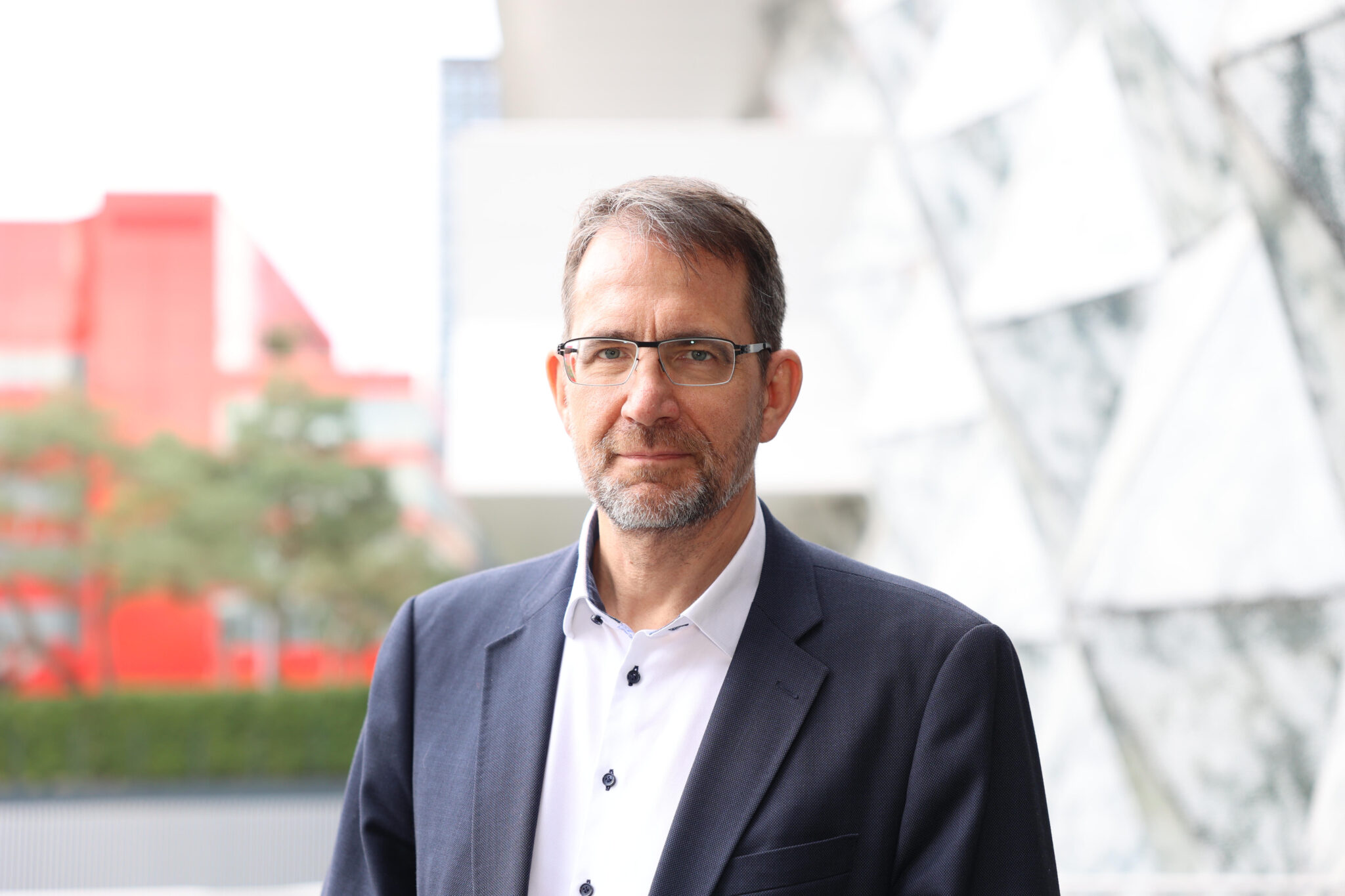
An interview with Prof. Michael Heneka, Research and advocacy for neurodegenerative diseases in Luxembourg
Biography
My name is Michael Heneka. I am a board-certified neurologist and clinician-scientist. My training spans experimental, preclinical and clinical neurology with a long-standing research interest in neuroinflammation and neurodegenerative diseases (Alzheimer’s, Parkinson’s, ALS). Since January 2022, I serve as the Director of the Luxembourg Centre for Systems Biomedicine (LCSB) at the University of Luxembourg where I also lead the Neuroinflammation research group.
Can you tell me more about your Advocacy?
I see advocacy as a threefold mission at LCSB. First, rigorous, collaborative science to understand the mechanisms of neurodegenerative diseases. Then, a strong, respectful engagement with people living with Parkinson’s to ensure that research addresses their priorities. Finally, working with healthcare systems and networks so research rapidly informs better everyday care.
That is why the LCSB participates in initiatives such as the National Centre of Excellence in Research on Parkinson’s Disease (NCER-PD), led by our principal investigator Prof. Rejko Krüger, a national effort to bridge fundamental science, clinical practice, and patient engagement. Our research centre also actively supported the development of the integrated care network ParkinsonNet Luxembourg, which recently become part of the Luxembourgish healthcare system after a successful pilot phase.
What is your passion and how did you get involved in Parkinson’s awareness and hope for a cure?
My scientific passion is understanding how innate immune and inflammatory processes contribute to neurodegeneration and how we can leverage that knowledge therapeutically. When I joined the LCSB, where research on Parkinson’s had been a core area for over a decade, I was interested in looking through this lens at a disease that sits at the intersection of genetics, environment, lifestyle and immune biology. As improving patient outcomes requires both fundamental mechanistic insights and close collaboration with clinicians and patients, this is the type of set-up we go for in many of our research projects. It also means that our centre is regularly involved in awareness and outreach activities, such as public lectures, lab visits and events with patients’ associations and healthcare professionals.
What type of goals do individuals with Parkinson’s have when working with you?
When patients or participants engage with our programmes, they typically contribute to cohorts studies, helping us collect data and biological samples. Thereby, they support research that may improve diagnosis and future therapies through identification of biomarkers, drug targets or stratification of patients into subgroups. We regularly invite patient groups to visit the LCSB to give them a deeper understanding how their contributions to research help us advance our understanding of the disease.
What effect can your Advocacy have on an individual with Parkinson’s?
Advocacy anchored in science can accelerate the development of personalised diagnostic tools and stratified treatments through research participation. This can in turn improve access to evidence-based, multidisciplinary treatment, leading to integrated care and better quality of life.
Additionally, open communication between scientists, healthcare professionals and patients can empower the latter through shared knowledge and access to various resources, from self-management tools, such as digital diaries, to physiotherapy videos. This network can also benefit caregivers by connecting them with trained multidisciplinary teams. The combined research-care approach shortens the path from discovery to practical benefit.
What would you like to see as a future goal for your Advocacy?
A widespread implementation of integrated care networks for neurodegenerative disorders across national healthcare systems, as well as a continuing support for fundamental and clinical research on these diseases.
What events do you participate in?
The LCSB is present at and also organises scientific conferences, public outreach activities, and awareness events. We also host and support patient-centred workshops and co-design sessions, for example to develop electronic diaries for people with Parkinson’s disease.
How does this also assist the caregivers?
Like patients, caregivers can benefit from the resources made available through the integrated care network. We for example worked with healthcare professionals to produce physiotherapy and occupational therapy videos that are helpful for common everyday situations. We also developped factsheets based on the current scientific knowledge that provide practical advices on diagnostic, treatments, nutrition and so on. The input of caregivers is very useful for us as well and they were invited to participate in the co-design sessions to develop an electronic diary for patients that I mentioned earlier.
How can someone get in touch? What is your website?
- LCSB (University of Luxembourg): https://www.uni.lu/lcsb-en/ — the LCSB website describes our current research projects and results. Contact: lcsb@uni.lu
- NCER-PD / Luxembourg Parkinson’s study: https://parkinson.lu — for information on the national research programme, participation and patient resources.
- ParkinsonNet Luxembourg: https://www.parkinsonnet.lu/en/ — to find therapists specialised on Parkinson’s disease. To sign up or contact the network (email: info@parkinsonnet.lu; phone: +352 44 11 66 35)
How can others also become advocates for awareness?
Clinical studies are often looking for people who can join the control group (not patients) so participating in these studies and mentioning them around you is always a good way to support clinical research. You can also volunteer for a local patient organisation, help with awareness events and with the dissemination of high-quality information. Being able to point people who need support in the right direction and provide them with useful contacts is already a great help. And if you are a health professional, you can of course get trained via an integrated care network such as ParkinsonNet to raise standards of care nationwide.
In your opinion what is the key to effective advocacy?
Effective advocacy is patient-centred, evidence-based and cross-sectoral. It must combine rigorous science, transparent communication, inclusion of patient voices, and partnerships with clinicians so that research contributes to direct impact for patients.
How can we better fundraise to support a cure for Parkinson’s?
At the LCSB, we recently created the Parkinson’s Research Fund to be able to collect small donations over time and then use these to kick start new scientific initiatives or boost ongoing research projects. This fund is complementary to the large-scale support we can get from foundations or companies. It allows everybody who wishes to contribute to the fight against Parkinson’s disease to do so within their means and it helps us makes the most out of different types of donations.
Of course, fundraising is tightly linked to communication, so it is also important to stay in regular contacts with donors, through dedicated events and brochures, to keep them informed of the impact of their contributions.
What other activities do you undertake to help improve and support daily living (e.g., exercise and alternative remedies)?
At the LCSB, one of our research group led by Prof. Jochen Klucken focuses on Digital Medicine. They study how digital devices, such as smart watches and wearable sensors, can be used in the context of healthcare. In the case of Parkinson’s disease, it could be to monitor patients at home and prevent falls for example. They also have a project on electronic diaries that could become a useful tool to help patients with disease management. In addition to these research projects that have a direct link with improvements for daily living, we promote evidence-based approaches in healthcare through partners. ParkinsonNet Luxembourg, the integrated care network in the country, provides training and resources for therapists so that they can offer physiotherapy and regular exercise programmes adapted to Parkinson’s symptoms, as well as speech & language therapy and occupational therapy for daily functioning. We emphasise interventions supported by evidence and discourage unproven remedies.
Why should people who don’t have Parkinson’s care about this?
Even if you don’t have Parkinson’s, this disease affects all of us. Parkinson’s incidence is on the rise globally, driven in large part by ageing populations. As societies grow older, the number of people diagnosed with Parkinson’s is expected to increase significantly, placing greater demands on healthcare systems, caregivers, and public resources. Understanding and supporting Parkinson’s research and integrated care today helps build a more prepared society for tomorrow.
In addition, research into Parkinson’s disease also informs broader neuroscience (aging, neuroinflammation, biomarkers) with potential implications for dementia and other neurological disorders.
Have you had any family members or relatives affected by Parkinson’s disease?
As an institutional representative, I emphasise that many of our staff, collaborators and community members are touched by neurodegenerative disease in some way. Our programmes were established precisely because this is a widespread challenge that requires national commitment.
If you had one final statement or quote you could leave for the Parkinson’s community, what would it be?
Luxembourg’s long-term investment in Parkinson’s research shows how science, through strong connections to patients and clinical care, can lead to tangible progress. By combining our efforts to understand diseases mechanisms and the development of a comprehensive care network, we can pave the way toward better personalised prevention and treatment strategies for individuals with Parkinson’s and for those at risk.
____________________________________________________
TogetherForSharon® In memory of my mother, Sharon to voice awareness & hope for a Parkinson’s Disease cure. Sharon’s Son, George
Support https://www.togetherforsharon.com/shop/