
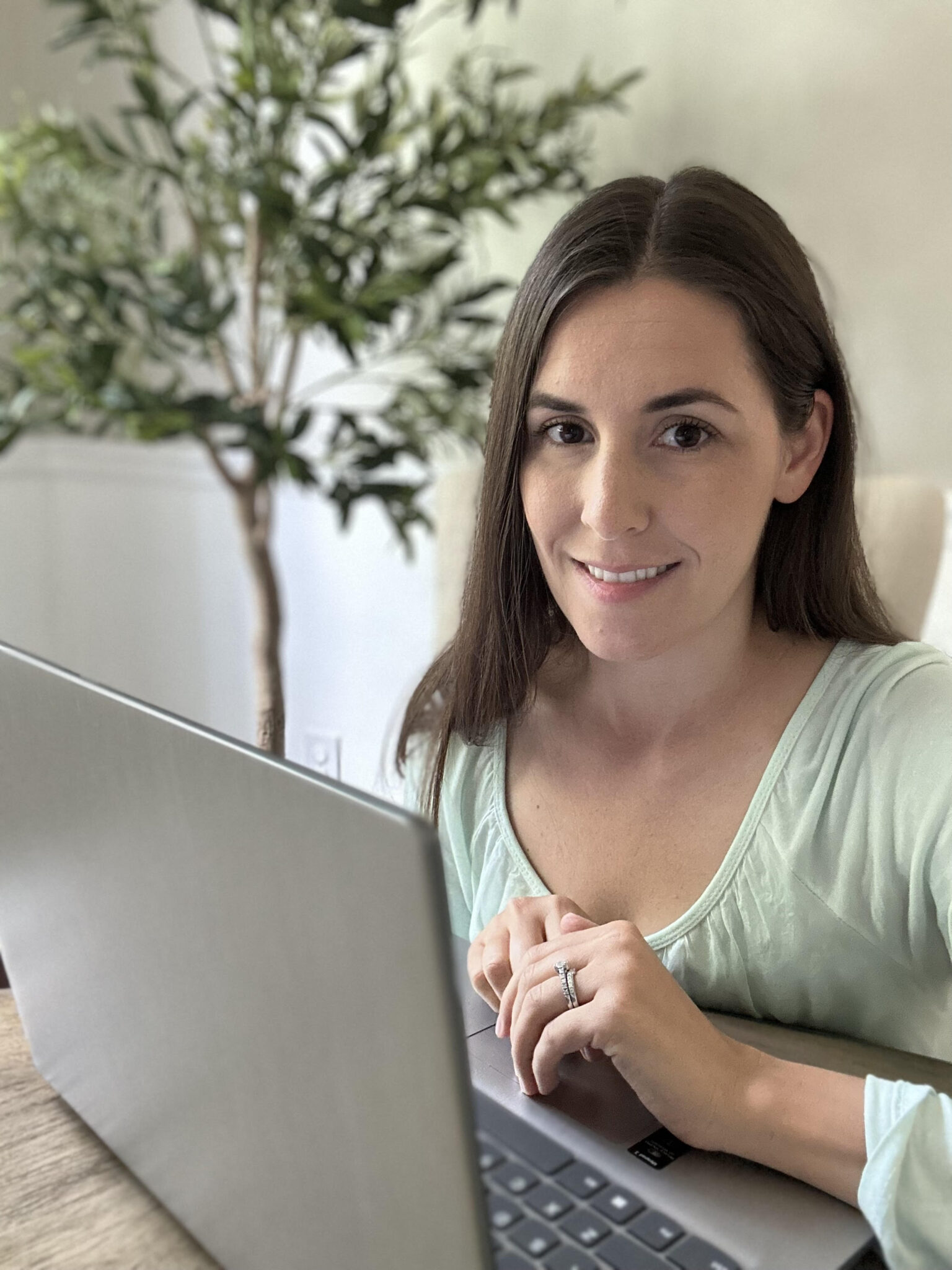
An interview with Kim Bachmann: When Parkinson’s is Personal: A Speech-Language Pathologist Inspired by Her Mother
Biography
I’m the owner of Natural Speech and Language and have over 13 years experience as a Speech-Language Pathologist/Parkinson’s advocate. My focus has always been on helping adults with neurological conditions, a cause close to my heart. In my personal life, I’m an adult child supporting a parent with Parkinson’s and I know how important great care is. I strive to support my patients with compassion and to improve their quality of life.
Please tell me a little about your background.
I have worked across a range of settings, including hospitals, skilled nursing, acute rehab, outpatient clinics, and home health. Originally from New York, I lived for a time in Florida and now am located in New Jersey. Today, I am licensed in all three states, as well as Pennsylvania, and able to support patients via telehealth. It’s a model I love because it takes the burden of commuting to an appointment off of the patient and makes great speech therapy accessible for everyone.
My most rewarding experience was in an outpatient clinic where the majority of my caseload consisted of individuals with Parkinson’s and Parkinson’s plus syndromes, which led me to become a certified SPEAK OUT!® provider, a program developed by the Parkinson Voice Project.
My clinical approach emphasizes whole-person care, combining evidence-based speech and swallowing therapy with education, counseling, and emotional support. With both professional expertise and a personal connection to Parkinson’s, I am committed to supporting patients and their families so they feel heard, empowered, and supported throughout their journey.
Can you tell me more about your Advocacy?
From evaluation to discharge and beyond, I focus on ensuring my patients are educated on what Parkinson’s disease is and how it can impact speech, swallowing, and cognition. Patients are able to improve and maintain their communication and swallowing abilities through research-based exercises and implementation of compensatory strategies.
I check in with patients regularly beyond discharge to provide refresher treatment sessions as needed. I also connect them with community resources like Mission PD, a local non-profit organization focused on wellness for people with Parkinson’s, and the Parkinson Voice Project, to support their home exercise program.
What is your passion and how did you get involved in Parkinson’s awareness and hope for a cure?
I’ve always had a special interest in Parkinson’s Disease— before I ever knew that it would impact me personally. While in my master’s program, I pursued certification in LSVT LOUD and treated individuals with Parkinson’s. A few months later, this passion became deeply personal, when my mother was diagnosed. Her diagnosis strengthened my desire to better understand the disease and it’s impact on speech—not only as a clinician, but also as a daughter. Today, I can better support my mother with this knowledge and it is my mission to help others navigate similar challenges.
What type of goals do individuals with Parkinson’s have when working with you?
Parkinson’s can make both communication and swallowing difficult. My patients often come to me with complaints of a low, soft voice and report that their family/friends have difficulty hearing them. Often times, they also have difficulty swallowing and cough while eating or drinking. I’m glad they connected because these challenges can progress over time if left untreated. Together, we are able to work on improving their communication and swallowing abilities which betters their overall quality of life.
What type of training and how long are the programs?
I completed my master’s degree in Speech-Language Pathology, which included six years of combined undergraduate and graduate education. After that, I completed my clinical fellowship to earn my Certificate of Clinical Competence in Speech Language Pathology (CCC-SLP) which is a national certification from the American Speech-Hearing Association. I also pursued specialized training, becoming certified in LSVT LOUD® and in the SPEAK OUT!® program developed by the Parkinson’s Voice Project.”
What effect can your Advocacy have on an individual with Parkinson’s?
My hope is to bring more awareness to individuals with Parkinson’s as well as their families about speech & swallowing therapy. Many people don’t realize that Parkinson’s can affect speech, voice, swallowing, and cognition. Even those that do often don’t know that these challenges can be treated. By raising awareness, advocacy encourages earlier referrals to Speech-Language Pathologists, which is essential in helping individuals maintain their ability to communicate and swallow safely. Speech and swallowing therapy also plays a key role in reducing serious risks like aspiration pneumonia, and all of this combined leads to a better quality of life.
What would you like to see as a future goal for your Advocacy?
I would love to increase early awareness and access to speech and swallowing therapy. Strengthening connections to community resources and interdisciplinary support is also crucial. Beyond speech language pathologists, physical therapists, occupational therapists, and social workers also are vital in helping patients live well with Parkinson’s. I often refer patients to other providers in other disciplines when indicated. Overall, I hope to empower individuals and families to better understand symptoms, advocate for timely referrals, and feel supported throughout the disease process.
What events do you participate in?
I support Parkinson’s awareness through community involvement. I’ve served as a vendor for PMD Alliance’s Empower Your Journey and participated in both the Parkinson’s Unity Walk and Moving Day: A Walk for Parkinson’s to raise funds and awareness.
How does this also assist the caregivers?
Patients’ caregivers/family members are actively involved in my treatment sessions and are educated on carryover strategies. They also learn about home exercise programs to optimize progress and support achievement of the patient’s goals.
How can someone get in touch? What is your website?
If someone would like to inquire about speech therapy services, they can call me directly at (732) 558-2242, email: naturalspeechlanguage@gmail.com or visit my website: naturalspeechlanguage.clientsecure.me
How can others also become advocates for awareness?
Others can become advocates by increasing their awareness of Parkinson’s-related communication and swallowing changes. By knowing more about the disease progression, others can encourage early referrals to speech therapy.
How does telehealth speech therapy benefit individuals with Parkinson’s?
Telehealth allows individuals with Parkinson’s to access specialized speech therapy from the comfort of their own home, eliminating the need for driving or travel. I provide secure, HIPAA-compliant services through a client portal using SimplePractice, where I meet with patients face-to-face via video call and complete exercises together in real time. My patients prefer this model because it is convenient, accessible, and allows for consistent participation in therapy without the physical or logistical barriers of in-person visits.
In your opinion what is the key to effective advocacy?
The key to effective advocacy is education and early intervention. Teaching individuals and families about how Parkinson’s can affect communication and swallowing, enables them to ask for support and services as needed. Earlier intervention always breeds the best results, so knowledge is crucial, though it is never too late for speech therapy. When people are informed and supported, they are better able to access care, participate in treatment, and make decisions that improve quality of life.
How can we better fundraise to support a cure for Parkinson’s?
Making fundraisers easy to participate in, both in person and online, so more people can get involved.
What other activities do you undertake to help improve and support your daily living Eg exercise and alternative remedies?
I emphasize consistent home exercises while also encouraging patients to stay socially active. We talk about their weekly schedule and I encourage them to participate in social activities that keep their communication and cognitive-communication skills strong.
Why should people who don’t have Parkinson’s care about this?
People should care because Parkinson’s affects real people’s daily lives, and understanding it helps us support them, raise awareness, and promote research for better care.
Have you had any family members or relatives affected by Parkinson’s disease?
Yes— my mom.
If you had one song that would tell us more about you or represent your life, which song would it be?
“Unstoppable” by Sia
If you had one final statement or quote you could leave for the Parkinson’s community, what would it be?
Communication is more than words—it’s connection, independence, and life. Together, we can preserve it.
________________________________
TogetherForSharon® In memory of my mother, Sharon to voice awareness & hope for a Parkinson’s Disease cure. Sharon’s Son, George
Support https://www.togetherforsharon.com/shop/
Would you like to share your journey! Reach out and together our Voices are so much STRONGER!