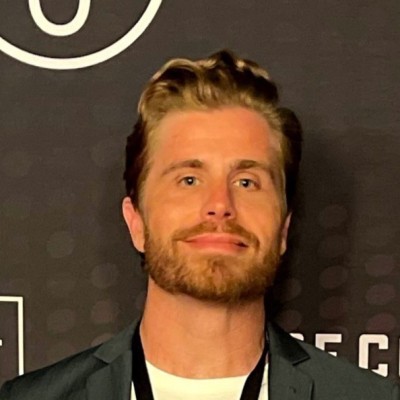
An interview with Justin Neill: Advocacy and New Goals!
Biography:
I was born and raised in Santa Cruz, California, where he developed a lifelong love of surfing, cycling, and being outdoors.
At 36, I was diagnosed with young-onset Parkinson’s disease, a diagnosis that completely changed the direction of his life. Over the years, I have learned how to navigate the challenges of Parkinson’s while continuing to build a career, stay active, and push himself toward new goals.
My professional background spans entertainment and the startup world, but his experience with Parkinson’s has led him toward something more personal: sharing his story and connecting with others in the Parkinson’s community.
Most recently, I underwent Deep Brain Stimulation (DBS) using a Medtronic system, beginning another new chapter in his life with Parkinson’s.
Today, I am an active member of the Parkinson’s community, a public speaker, and the author of an upcoming memoir about my experiences. I bring humor and honesty to conversations about Parkinson’s, while also talking openly about the harder parts — fear, identity, relationships, and learning how to move forward when life doesn’t go according to plan.
When I’m not working or speaking, you can usually find me on his bike, near the ocean, or spending time with family and friends.
Can you tell me more about your Advocacy?
Yes. I’m very involved with PCLA (Parkinson’s Community Los Angeles), where I help support the YOPD (Young Onset Parkinson’s Disease) community through support groups and events. I’ll also be moderating PCLA’s signature event, Thrive With Five.
I’m also involved with Team Fox LA and participate in several of their events, including the annual Topgolf fundraiser and their 5K. One of my favorite events each year is the SoCal Ride for Parkinson’s. It’s such an amazing event that brings the community together in a really special way, and Bob Lear, who is behind the event, is a great guy whose dedication to the Parkinson’s community is inspiring.
Beyond these organizations and events, I use my social media platforms to raise awareness about Parkinson’s, share my experiences, and help bring greater visibility to the disease and the incredible community surrounding it.
What is your passion and how did you get involved in Parkinson’s awareness and hope for a cure?
My passion is helping people who are newly diagnosed with Parkinson’s navigate what can be an overwhelming and uncertain time. From the moment I was diagnosed, my mind immediately went to how I could help others going through the same thing. I’ve found that when you focus on helping someone else, it gives you purpose and takes the focus away from your own challenges.
When you have Parkinson’s, you’re living with it every minute of every day. It becomes part of your life whether you want it to or not. For me, that reality sparked a passion to raise awareness, support others, and advocate for hope and ultimately a cure. If living with this disease every day doesn’t ignite a passion to make a difference, I don’t know what will.
What type of goals does individuals with Parkinson’s have when seeing your Advocacy?
I can only describe it by what some of my friends who also have Parkinson’s say: “What would Justin do?”
I try to bring humor, positivity, and a sense of perspective to the day-to-day realities of living with Parkinson’s. This disease can be incredibly challenging, but I believe there is still plenty of room for laughter, connection, and joy.
If my advocacy helps someone approach a difficult day with a little more optimism, feel less alone, or simply feel better after spending time with me, then I feel like I’m making a difference.
What effect can your Advocacy have on an individual with Parkinson’s?
I’ve found that many people who are newly diagnosed with Parkinson’s feel like they’re going through it alone. One of the most important things I want my advocacy to do is show them that they have someone in their corner—someone who has walked this path before and understands many of the emotions, questions, and challenges that come with a diagnosis.
If I can use my own experiences to help guide someone, offer support, and perhaps help them avoid some of the difficulties I encountered along the way, then my advocacy is doing exactly what I hope it will do. Sometimes just knowing you’re not alone can make a tremendous difference.
What would you like to see as a future goal for your Advocacy?
My goal is to help millions of people living with Parkinson’s feel seen, heard, supported, and more hopeful about their future. I want to continue using my voice and my experience to remind people that a Parkinson’s diagnosis doesn’t mean they have to lose their sense of humor, their positivity, or their hope.
I’d also love to see meaningful breakthroughs in how we treat Parkinson’s. While treatments like DBS and medications such as Sinemet have made an enormous difference for many people, I hope the future brings new options that go beyond managing symptoms and move us closer to actually changing the course of the disease—and ultimately, finding a cure.
What events do you participate in?
Team Fox LA Topgolf event. I’m also involved in a number of events with PCLA (Parkinson’s Community Los Angeles), including Thrive With Five, as well as one of my favorites, the SoCal Ride for Parkinson’s.
For me, these events are about more than raising awareness or funds—they’re an opportunity to connect with others in the Parkinson’s community, support one another, and remind people that none of us has to face this disease alone.
How does this also assist the caregivers?
I make a point of ensuring that caregivers are included in our support groups because Parkinson’s doesn’t only affect the person who is diagnosed—it affects the people who love and care for them as well.
Caregivers are living with the realities of this disease every minute of every day, too, and that is not an easy load to carry. They need a place where they can feel seen, heard, supported, and understood just as much as the person with Parkinson’s does. By including caregivers in the conversation, we create a stronger support system for everyone involved and remind them that they don’t have to carry that responsibility alone.
How can someone get in touch? What is your website?
Instagram: @Jneill10
TikTok: @Jneill_10
Facebook: Justin Neill — https://www.facebook.com/justin.neill.5/
How can others also become advocates for awareness?
There are so many ways to become an advocate, and it doesn’t have to start with something huge. Simply participating in a fundraising event, sharing information, volunteering, or showing up to support the Parkinson’s community is a great first step.
Parkinson’s is one of the fastest-growing neurological diseases in the world, so we need as many voices as possible raising awareness and supporting the search for better treatments and, ultimately, a cure. Advocacy can start small—the important thing is to get involved. Every person who shows up, speaks up, or shares their story helps move us forward.
What are some of the side effects of Parkinson’s medications that people don’t talk about enough?
I don’t think this topic gets nearly enough attention, especially when someone is newly diagnosed. We talk a lot about what the medications can do to help manage Parkinson’s, but not always enough about the physical, mental, and behavioral side effects that can come with them. Things like dyskinesia, “on-off” periods, sleepiness, hallucinations, and even impulse-control issues can have a major impact on someone’s life.
I think patients and their caregivers need to know what to look for and feel comfortable talking openly about changes they’re experiencing. The medications can be incredibly important, but understanding the whole picture helps people advocate for themselves and have better conversations with their doctors
In your opinion, what is the key to effective advocacy?
I think the key to effective advocacy is being completely transparent about what life with Parkinson’s is really like. It’s important to share the victories, but it’s just as important to show the difficult days.
I recently underwent DBS, and I made a conscious decision to share the good, the bad, and the ugly of that experience. I wanted people to see a real and unfiltered look at the daily struggles, rather than a polished version of life with Parkinson’s.
To me, that’s where advocacy can have the greatest impact. When people see the reality, they feel less alone. And when they see you continuing to move forward despite those struggles, hopefully it gives them something equally important: hope and courage.
How can we better fundraise to support a cure for Parkinson’s?
You might have to ask my friend Bob that question—he’s the best fundraiser I’ve ever seen! What I’ve learned from watching him is that successful fundraising is really about bringing people together, creating a sense of community, and giving them a reason to care.
For me, my strength is sharing my story, raising awareness, and helping people understand why this fight matters. If that inspires someone to donate, participate in an event, or get involved in finding a cure, then I’ve done my part.
What other activities do you undertake to help improve and support your daily living Eg exercise and alternative remedies?
Exercise is a huge part of my daily life—I like to say I work out like a madman. I lift weights, cycle, surf, and do my best to stay as physically active as possible. I also maintain a very clean diet and make therapy and support groups an important part of taking care of myself mentally and emotionally.
Another incredibly meaningful experience for me was writing my book, Riding to Recovery, about my personal journey with Parkinson’s and coming to terms with my diagnosis. Putting everything down on paper forced me to really sit with what I had been through, process it, and reflect on how far I’ve come. In many ways, writing the book became its own form of therapy and healing for me.
Why should people who don’t have Parkinson’s care about this?
People who don’t have Parkinson’s should care because this disease is growing at an alarming rate and is affecting more individuals and families every year. Parkinson’s doesn’t just impact the person who is diagnosed—it affects spouses, children, friends, caregivers, and entire communities.
There is also growing research into the role that environmental factors, including exposure to certain pesticides and chemicals, may play in Parkinson’s risk. While we don’t yet have all the answers, the increase in diagnoses makes understanding these potential connections even more important.
This isn’t just an issue for people who have Parkinson’s today. It’s something we should all care about because greater awareness, research, and funding now could help protect future generations and bring us closer to better treatments and, ultimately, a cure.
Have you had any family members or relatives affected by Parkinson’s disease?
Nope. Just me.
If you had one song that would tell us more about you or represent your life, which song would it be?
“I Won’t Back Down” – Tom Petty
If you had one final statement or quote you could leave for the Parkinson’s community, what would it be?
My message to the Parkinson’s community is simple: Continue to live your life. Parkinson’s may change how you do certain things, but don’t let it stop you from living. Keep moving, keep laughing, keep showing up, and keep doing the things that bring you joy.
The moment you stop living because of this disease, you’ve already given it too much. Keep living. Keep fighting. Keep going.
TogetherForSharon® In memory of my mother, Sharon to voice awareness & hope for a Parkinson’s Disease cure. Sharon’s Son, George
Support https://www.togetherforsharon.com/shop/
Would you like to share your journey! Reach out and together our Voices are so much STRONGER!