
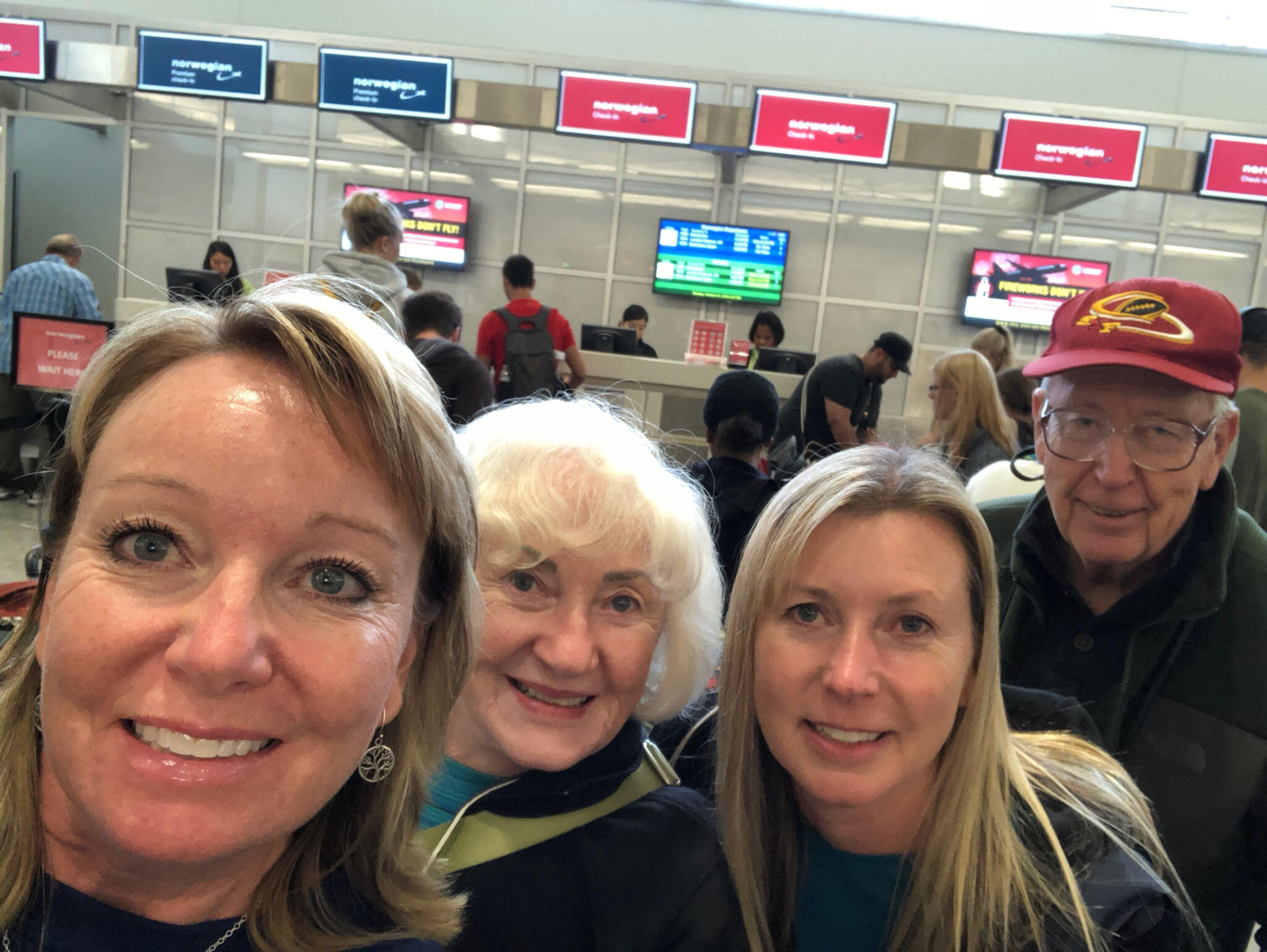
An interview with Jennifer Thornton: Connecting the Dots: Advocacy, Early Clues, and a New Hypothesis in Neurodegeneration
Biography
I am an independent researcher, caregiver-advocate, and the author of Saving My Family: The Rise of Parkinson’s. I hold a Bachelor of Science in Business Administration with a concentration in Accounting and have spent more than a decade working as a multi-state property manager and accountant while also serving in community leadership roles. I am also a co-author of “Mites, Microbes, and Neurodegeneration: A Unified Environmental Hypothesis for Parkinson’s, Alzheimer’s, and Lewy Body Dementia,” published in the Journal of Alzheimer’s Disease. I continue to engage with clinicians and researchers to encourage rigorous testing of our team’s hypothesis and to support improved early recognition of potentially treatable symptoms.
Please tell me a little about your background.
For over a decade, I worked as a multi-state property manager and accountant for my parents, while also balancing family life and community service. Earlier in my career, I worked as a senior auditor and had the opportunity to audit well-known companies.
Can you tell me more about your Advocacy?
My advocacy began at home, as a daughter and caregiver trying to understand what was happening to my father in real time. I started documenting visible symptoms before diagnosis—particularly skin and eye changes—because I believed they mattered clinically and could be important clues, not “separate issues.”
At one point, I brought documentation to a major university because I believed the same process affecting his skin and eyes might be connected to his cognitive decline. I was told, essentially, that Neurology and Dermatology were separate lanes. That disconnect stayed with me. After my father passed, additional information reinforced how much we still need integrated, cross-specialty investigation—especially as new tools emerge, including skin-based diagnostics for synucleinopathies. The Syn-One test identifies precursors to lewy bodies on the skin. The skin biopsy results do not always test positive everywhere. Some locations, like the back of the neck, showed a 93% positivity for people with Parkinson’s, where other areas of the body were much lower (BIDMC study).
Today, my advocacy focuses on encouraging scientific attention to the full pattern of symptoms, supporting caregivers in documenting what they observe, and urging research that tests environmental hypotheses with rigorous methods.
What is your passion and how did you get involved in Lewy body awareness and hope for a cure?
My passion is helping end Lewy body diseases by sharing credible observations and encouraging research that investigates upstream causes—not only downstream symptoms.
My father died from Lewy body dementia more than three years ago, and a loved one by marriage has developed symptoms associated with Parkinson’s, including dystonia and worsening tremors.
What type of goals does individuals with Lewy body have when working with you?
I hope advocacy can help individuals and families in three practical ways:
- Earlier recognition of patterns: Many people experience non-motor symptoms and visible inflammatory issues (skin, eye, sinus, or ear concerns) well before a clear neurologic diagnosis. I want people to feel empowered to take these symptoms seriously and pursue a thorough evaluation.
- More integrated medical care: Patients benefit when providers collaborate across specialties instead of treating systems in isolation. When symptoms are addressed early and comprehensively, quality of life can improve—regardless of the ultimate diagnosis.
- Informed conversations about emerging research: I also share research interests that may matter to families—such as ongoing work exploring metabolic interventions. For example, ketone ester research has attracted attention in aging and neurodegeneration models, and our family personally observed meaningful changes in physical function and cognition during my father’s illness. I share this thoughtfully, not as a universal claim, but as an area that deserves careful research and clinical guidance.
What effect can your Advocacy have on an individual with Parkinson’s?
My advocacy aims to help individuals with Parkinson’s and related Lewy body disorders feel seen, informed, and empowered. By encouraging early recognition of non-motor and visible symptoms—such as chronic skin, eye, sinus, sleep, hearing, and inflammatory issues—patients and caregivers can seek timely evaluation and coordinated care before symptoms escalate. I also advocate for a more integrated, science-driven approach to care, where clinicians collaborate across neurology, dermatology, ophthalmology, and primary care rather than treating symptoms in isolation.
What would you like to see as a future goal for your Advocacy?
My long-term goal is to see rigorous research that can directly test whether mites—or mite-associated inflammation and microbes—can contribute to synuclein-related pathology. One specific goal is encouraging studies that use lab-grown human skin models to evaluate whether exposure to mites, mite byproducts, or associated pathogens can trigger measurable biomarkers (such as phosphorylated alpha-synuclein). If the hypothesis is wrong, we learn, and if it’s right, we open a new prevention pathway.
What events do you participate in?
My first major event was attending the World Parkinson Congress in 2023 in Barcelona with my mom, where I presented an abstract titled “What Causes Parkinson’s Disease?” It was a pleasure to meet doctors, professors, and researchers from all over the world – some with connections/supporting information to my hypothesis.
How does this also assist the caregivers?
Caregivers are often the first to notice patterns—especially subtle changes that don’t show up in a short appointment. I encourage caregivers to:
- Document changes consistently(photos, a symptom journal, timelines).
- Push for follow-up and coordination when symptoms recur across systems (skin/eye/sinus/ear plus neurologic changes).
- Seek timely diagnosis of the cause/treatment/Cure
Caregivers deserve support, respect, and practical tools—because their observations can be invaluable.
How can someone get in touch? What is your website?
Website: pdskinconnection.com or dementiamites.com Email: dementiamite@gmail.com
How can others also become advocates for awareness?
Start with what you can do today:
- Write everything down(dates, symptoms, triggers, what helped, what worsened).
- Take clear photos when appropriate, with dates attached.
- Ask better questions at appointments and request collaboration across specialties when symptoms overlap.
- Share your story responsibly—your first-hand account may help guide research priorities and improve earlier recognition for others.
What is the top medical journal article that supports your findings?
A 2024 article titled Association between Scabies Treatment and Parkinson’s Disease: A Nationwide, Population-Based Study “Conclusions: Scabies patients are at a 1.46-fold increased risk of developing PD, but those treated with lindane (a neurotoxic pesticide) exhibit a significantly lower risk, suggesting potential protective effects of lindane against PD.”
In your opinion what is the key to effective advocacy?
For me, effective advocacy is credible documentation + persistence + collaboration. A personal story opens the door, but rigorous writing, careful language, and engagement with researchers help the conversation move forward. I’m grateful that more authors and studies are now discussing mites, microbes, and environmental contributors in neurodegeneration—topics that felt far less visible when I first began sharing this perspective.
What other activities do you undertake to help improve and support your daily living Eg exercise and alternative remedies?
I regularly consume caffeinated coffee, as research from Rush University has reported an association between caffeinated coffee consumption and reduced Lewy body pathology in the brain. In addition, I use ketone ester and take a proactive approach to promptly addressing dermatologic, ocular, and other health concerns.
Why should people who don’t have Parkinson’s care about this?
Neurodegenerative diseases affect families, workplaces, and communities, and the numbers appear to be rising. Even if you’re not personally impacted today, prevention and earlier detection matter to everyone. If we can identify upstream contributors and reduce risk, we can protect millions of people and reduce enormous emotional and economic burden.
Have you had any family members or relatives affected by Parkinson’s disease?
Yes. Lewy body diseases have impacted my family and community in multiple ways. My father died of Lewy body dementia. A cousin has Parkinson’s. A neighbor—an identical twin—died from Parkinson’s with dementia while his twin remains healthy. A loved one by marriage has Parkinson’s-related symptoms, and I have multiple friends whose parents have had or passed from Lewy body dementia. These experiences are a major reason I keep advocating for deeper investigation.
If you had one song that would tell us more about you or represent your life, which song would it be?
“Whatever It Takes” by Imagine Dragons.
During a period of serious illness years ago, I made a personal commitment to God that if I recovered, I would dedicate my life to helping others. That commitment has shaped my mission and my work ever since. I have met with professors and researchers around the world and have invested my own time and resources to advance research and dialogue around the environmental factors that may contribute to Lewy body diseases. I am committed to doing whatever it takes to pursue rigorous scientific validation of these hypotheses, with the hope of contributing to a better understanding, prevention, and ultimately improved outcomes for families affected by these conditions.
__________________________________________
TogetherForSharon® In memory of my mother, Sharon to voice awareness & hope for a Parkinson’s Disease cure. Sharon’s Son, George
Support https://www.togetherforsharon.com/shop/
Would you like to share your journey! Reach out and together our Voices are so much STRONGER!