Heavy Metals, Pesticide Exposure, and Agriculture: Environmental Risks and Parkinson’s Disease
Movement, balance, coordination, and many non-motor functions are all impacted by Parkinson’s disease, a progressive neurological condition. A growing body of research indicates that environmental exposures may have a major impact on the onset and course of Parkinson’s disease, even if genetics may play a role in some individuals. Because workers and surrounding populations are frequently exposed to pesticides, herbicides, fertilizers, and heavy metals over extended periods of time, agricultural environments in particular have been a significant focus of neurological study.
In contemporary agriculture, heavy metals and pesticides are frequently employed to increase crop yields and manage pests. Many of these chemicals, however, have the potential to linger in soil, water, and the air long after they are applied, which could lead to long-term human exposure. Researchers are still looking into how these environmental pollutants could harm dopamine-producing neurons and play a role in neurological conditions like Parkinson’s disease.
Exposure to Pesticides in Farm Environments
Chemicals called pesticides are used to eradicate weeds, fungi, insects, and other agricultural hazards. Although these substances aid in the production of food, some pesticides have been connected to detrimental effects on the nervous system. Residents who live close to agricultural fields, farm workers, and pesticide applicators may inhale chemical sprays, absorb poisons via their skin, or eat or drink tainted food or water.
Exposure to specific pesticides raises the risk of Parkinson’s disease, according to numerous studies. Because of their neurotoxic qualities, insecticides like chlorpyrifos and herbicides like paraquat have drawn special attention. While chlorpyrifos disrupts neurotransmitter signaling and nervous system function, paraquat causes oxidative stress in brain cells (Breckenridge, Berry, Chang, Sielken, & Mandel, 2016).
Dopamine-producing neurons in the substantia nigra, a part of the brain severely impacted by Parkinson’s disease, may be gradually harmed by repeated exposure to pesticides. Due to prolonged occupational contact with concentrated chemicals during planting, spraying, and harvesting operations, agricultural workers frequently have increased exposure risks.
Agriculture and Heavy Metals
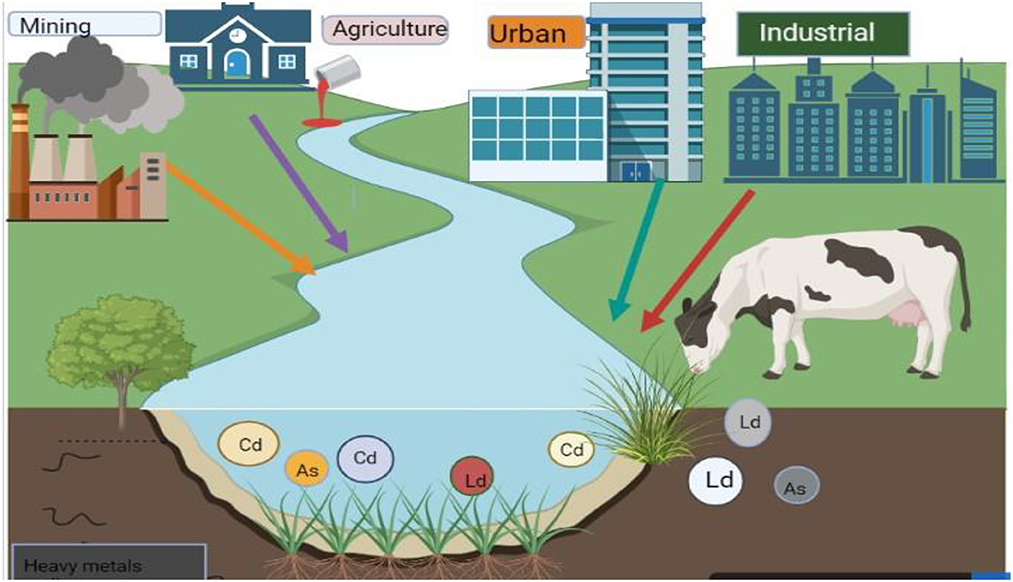
Naturally occurring substances, heavy metals can become hazardous when they build up in excess. Fertilizers, pesticides, industrial runoff, sewage sludge, mining operations, and irrigation with contaminated water can all lead to agricultural contamination. Metals including manganese, arsenic, cadmium, lead, and mercury can linger in soil for decades and contaminate food systems, crops, and groundwater.
Neurodegeneration and neurological impairment have been linked to long-term exposure to heavy metals. For instance, manganese exposure has long been associated with Parkinsonism-like movement abnormalities due to its toxic effects on the brain’s basal ganglia. Overexposure can affect cognitive function, balance, and motor coordination (Peres et al., 2016).
Additionally, oxidative stress, inflammation, and mitochondrial dysfunction in neurons may be caused by lead and cadmium. Over time, these harmful impacts may make people more susceptible to neurodegenerative illnesses. Contaminated dust, soil particles, drinking water, and food crops can repeatedly expose agricultural workers and rural populations.
Neurological Injury’s Biological Mechanisms
Researchers are still investigating the molecular mechanisms by which heavy metals and pesticides cause Parkinson’s disease. Oxidative stress is one such mechanism. Proteins, DNA, and neuronal membranes are all harmed by toxic substances’ increased creation of dangerous free radicals. Because dopamine-producing neurons need a lot of energy and oxygen, they are especially susceptible.
Mitochondrial dysfunction is another significant mechanism. Toxicants in the environment can damage mitochondria, which produce cellular energy and lower neuronal lifespan. In lab experiments, pesticides like paraquat and rotenone have been demonstrated to interfere with mitochondrial activity and mimic Parkinson-like symptoms (Hatcher, Pennell, & Miller, 2008).
Additionally, neuroinflammation seems to be important. Prolonged exposure to environmental pollutants may trigger inflammatory reactions in the brain, resulting in gradual damage to neurons. Furthermore, aberrant alpha-synuclein protein accumulation—a defining feature of Parkinson’s disease pathology—may be encouraged by some metals and pesticides.
Environmental and Public Health Issues
Workers and the community around them are both impacted by agricultural pollution. Pesticide spraying can cause chemical drift that extends beyond farmland into neighborhoods, schools, and water systems. Therefore, even in the absence of direct occupational activity, rural communities may experience long-term low-level exposure.
Due to their developing or compromised neural systems, children and elderly individuals may be particularly vulnerable. If drinking water supplies are contaminated by pesticides and heavy metals, communities that depend on groundwater close to agricultural regions may also be at higher risk of exposure.
Because low-income agricultural communities frequently face disproportionate exposure to hazardous chemicals while having limited access to healthcare treatments and environmental regulations, environmental justice issues are crucial. To lower long-term neurological hazards, public health professionals are still pushing for more stringent environmental monitoring and safer farming methods.
Prevention and Safer Farming Methods
Reducing agricultural toxin exposure is a key public health objective. When handling chemicals, farmers and agricultural workers should wear protective gear, adhere to pesticide safety regulations, and get the right training. Safe storage procedures, protective gear, and better ventilation can all reduce occupational exposure.
Reduced pesticide use and integrated pest control are examples of sustainable farming practices that may help reduce environmental contamination. To detect heavy metal buildup in agricultural areas, soil testing and water quality monitoring are crucial.
By carefully cleaning produce, supporting organic or low-pesticide farming projects, and pushing for more robust environmental safeguards, consumers may promote safer agriculture methods. Understanding how environmental pollutants affect the likelihood of neurological diseases and how preventative measures could lessen future health costs requires ongoing scientific investigation.
In conclusion
In study on Parkinson’s disease, exposure to pesticides and heavy metals in agriculture is a major environmental concern. Chronic exposure to agricultural toxicants may be linked to Parkinson’s disease-related oxidative stress, neuroinflammation, mitochondrial dysfunction, and dopamine neuron degeneration, according to mounting scientific evidence. Current findings emphasize the significance of environmental awareness, workplace safety, and sustainable agriculture methods, even if additional research is required to completely comprehend these intricate interactions. Reducing toxic exposure may have a significant impact on safeguarding the neurological health of neighboring populations and agricultural workers.
References
Breckenridge, C. B., Berry, C., Chang, E. T., Sielken, R. L., & Mandel, J. S. (2016). Association between Parkinson’s disease and cigarette smoking, rural living, well-water consumption, farming and pesticide use: Systematic review and meta-analysis. PLoS ONE, 11(4), e0151841. https://doi.org/10.1371/journal.pone.0151841
Hatcher, J. M., Pennell, K. D., & Miller, G. W. (2008). Parkinson’s disease and pesticides: A toxicological perspective. Trends in Pharmacological Sciences, 29(6), 322–329. https://doi.org/10.1016/j.tips.2008.03.007
Peres, T. V., Schettinger, M. R. C., Chen, P., Carvalho, F., Avila, D. S., Bowman, A. B., & Aschner, M. (2016). Manganese-induced neurotoxicity: A review of its behavioral consequences and neuroprotective strategies. BMC Pharmacology and Toxicology, 17(1), 57. https://doi.org/10.1186/s40360-016-0099-0
van der Mark, M., Brouwer, M., Kromhout, H., Nijssen, P. C. G., Huss, A., & Vermeulen, R. (2012). Is pesticide use related to Parkinson disease? Some clues to heterogeneity in study results. Environmental Health Perspectives, 120(3), 340–347. https://doi.org/10.1289/ehp.1103881
Photo Credit Frontiers In