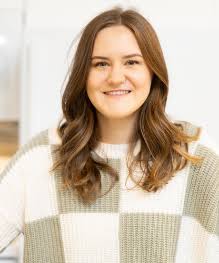
An interview Emily Truscott, MS, RD, LD, Nutrition Advocacy Within the Parkinson’s Community – It’s More Complex Than Just Eating Your Vegetables
Biography
Emily Truscott is a registered dietitian that specializes in neurological diseases. She holds a Bachelor of Family and Consumer Sciences in Dietetics from the University of Georgia and a Master of Science in Nutrition from Marywood University. She serves as an outpatient clinical dietitian, holding a joint position in the Department of Food Science and Human Nutrition at the University of Florida (UF) and the Fixel Institute for Neurological Diseases at UF Health. She primarily works with patients living with movement, memory, or neuromuscular disorders. She enjoys helping patients understand nutrition to promote better overall health.
Can you tell me more about your Advocacy?
I work with patients to help manage their non-motor symptoms, such as constipation, slow gastric emptying, orthostatic hypotension, appetite changes, and medication-diet interactions. Unfortunately, we live in a world that has lots of nutrition misinformation circulating. This can lead to unnecessary fear around food and nutrition. I enjoy having conversations with patients about what a healthy eating pattern looks like for them. Often, patients leave their appointment with me feeling relieved when we set attainable goals and formulate a plan that includes actionable steps.
What is your passion and how did you get involved in Parkinson’s awareness and hope for a cure?
My passion is helping people foster a healthy relationship with food and problem-solve when we identify barriers to people being able to meet their nutrition-related goals. For example, many people come to me to talk about medication-protein interaction. We can weed out whether they are having a true interaction, which is actually quite rare, or if there are other factors contributing to medication fluctuations. For those that experience interactions, we can put together a plan that allows them to still meet their dietary protein needs but minimizes symptom fluctuations. Sometimes it’s as simple as someone reading on the internet that they aren’t supposed to eat a certain food and me providing evidence-backed research that often recommends those foods in moderation. Essentially, I love when I’m able to tell people they can eat the foods they love as part of a healthful diet.
What type of goals does individuals with Parkinson’s have when working with you?
Because we see various non-motor symptoms in Parkinson’s, everyone’s goal is very individualized. People with chewing or swallowing difficulty might come to me to talk about how to modify the texture and consistency of the foods and beverages they consume to make chewing and swallowing easier. People with constipation are hoping for better bowel regularity. People that are unintentionally losing weight might have a goal to maintain muscle mass. On the opposite end of the spectrum, I also work with patients that are trying to lose weight to improve mobility, for instance.
What type of training and how long are the programs?
Some patients see me when they come to their yearly visit with their neurologists, and some patients see me on a weekly or monthly basis depending on their specific goals and needs.
What effect can your Advocacy have on an individual with Parkinson’s?
Nutrition can have a huge impact on people living with Parkinson’s. Advocating for a healthy relationship with food can positively impact one’s quality of life. Food freedom, or the ability to incorporate the foods you want and love into a healthful diet, is something that is not always talked about in the Parkinson’s realm. In fact, we see a lot of food restrictions without strong research to back it up.
What would you like to see as a future goal for your Advocacy?
My goal is to minimize the nutrition misinformation in Parkinson’s and help to contribute to a knowledge bank of evidence-based recommendations.
What events do you participate in?
I often join various community events virtually and in-person across Florida. I also join support groups, where I discuss nutrition-related topics and provide cooking demonstrations.
How does this also assist the caregivers?
I love working with caregivers and care partners just as much as I love working with patients. One’s support system can really make a difference in their Parkinson’s journey. I always consider the feasibility of my recommendations for not only patients, but also the people they are surrounded by.
How can someone get in touch? What is your website?
Email is the best way to reach me (emilytruscott@ufl.edu). I am also on Instragram (@nourishing_neurons). You can also check out our nutrition page on the Fixel website (https://fixel.ufhealth.org/getting-care/resources-support/nutrition-program/).
How can others also become advocates for awareness?
Get involved in local support groups and advocacy groups.
If you could add any questions to this interview that you may want others to learn about, what would the question(s) be?
When should I see a dietitian? Any time! Whether you have nutrition-related concerns or not, meeting with a dietitian to evaluate your current diet and goals is never a bad idea. Dietitians can also help with nutrition-related concerns, like swallowing difficulty, unintentional weight loss, presence of other chronic illness (diabetes, kidney disease, heart disease, cancer, etc.), appetite changes, questions about dietary supplements, you name it!
In your opinion what is the key to effective advocacy?
The key to effective advocacy is listening to patients and their needs. They are the reason for advocacy, after all.
How can we better fundraise to support a cure for Parkinson’s?
The first step is awareness!
What other activities do you undertake to help improve and support your daily living Eg exercise and alternative remedies?
Adopting a balanced diet, of course! I also do my best to maintain a good work/life balance and support my mental/emotional health through various hobbies, like reading, scrapbooking, and traveling.
Why should people who don’t have Parkinson’s care about this?
Nutrition misinformation can impact anyone! We all need food, so we all consume information related to nutrition whether we realize it or not.
Have you had any family members or relatives affected by Parkinson’s disease?
I have not, but I do understand the burden of living with a chronic disease. Everyone’s disease course is unique no matter the diagnosis, so I do my best to listen and understand how Parkinson’s impacts each patient individually.
If you had one song that would tell us more about you or represent your life, which song would it be?
Here Comes the Sun – The Beatles
It represents my mindset on resilience amid obstacles.
What are your social media tags?
@nourishing_neurons
If you had one final statement or quote you could leave for the Parkinson’s community, what would it be?
Throughout your journey, try to find enjoyment in the foods that nourish you, make sure you are obtaining information from a reputable source, and always work with your care team if you have questions or concerns about any step in your journey.
TogetherForSharon® In memory of my mother, Sharon to voice awareness & hope for a Parkinson’s Disease cure. Sharon’s Son, George
Support https://www.togetherforsharon.com/shop/
Would you like to share your journey! Reach out and together our Voices are so much STRONGER!