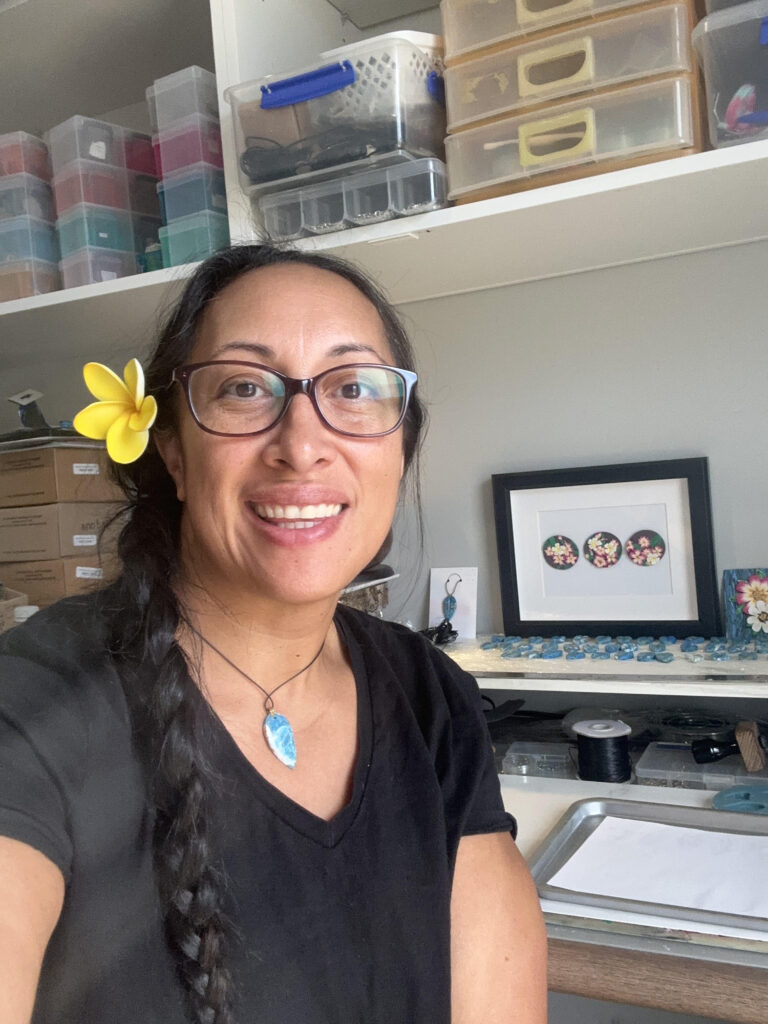
An interview with Dernice Rongo, My Life in Motion: Creating Hope Through Art and Parkinson’s Advocacy
Biography
My name is Dernice Rongo. I am a proud Cook Islands woman, wife, mother of five, artist, small business owner and Parkinson’s advocate living in Perth, Western Australia. I was diagnosed with Young Onset Parkinson’s in 2022, and I now use art, movement and storytelling to share my experience and connect with others.
Can you tell me more about your Advocacy?
My advocacy shares the honest reality of living with Parkinson’s through art, dancing, social media and community engagement. I aim to raise awareness, challenge misconceptions about who Parkinson’s can affect and remind others that they are not alone.
What is your passion and how did you get involved in Parkinson’s awareness and hope for a cure?
My passion is using creativity to connect with people, raise awareness and support Parkinson’s research. Art began as therapy after my diagnosis, then grew into a greater purpose through Dernice Creations and projects such as Pendants 4 Parkinson’s, where I created more than 100 handmade pieces to raise funds for the Shake It Up Australia Foundation.
What type of goals does individuals with Parkinson’s have when seeing your Advocacy?
Many people with Parkinson’s wanting to maintain their independence, keep moving and continue doing the things that give their lives meaning. I hope my advocacy encourages them to set personal and flexible goals, celebrate small progress and stay connected with others.
What type of training and how long are the programs?
I do not currently provide a formal training program. My advocacy continues throughout the year through social media, community involvement and creative fundraising campaigns, with special projects held during Parkinson’s Awareness Month.
What effect can your Advocacy have on an individual with Parkinson’s?
Advocacy can help someone feel seen, understood and less isolated. By sharing both the challenges and the joyful moments, I hope to encourage people to keep participating in life in whatever way is possible for them.
What would you like to see as a future goal for your Advocacy?
My future goal is to reach and support more people, particularly those with Young Onset Parkinson’s and people within our Pacific communities. I would love to create more awareness campaigns, collaborate with other advocates and organizations and continue raising funds for better treatments and ultimately a cure.
What events do you participate in?
I participate in Parkinson’s Awareness Month activities, fundraising projects and community, cultural and fitness events where I can start conversations about Parkinson’s. I also take part in online awareness campaigns and share my daily experiences through social media.
How does this also assist the caregivers?
Sharing real experiences can help caregivers and families better understand the many ways Parkinson’s affects daily life. It can also help caregivers feel recognized, encourage open conversations and connect them with a wider community of support.
How can someone get in touch? What is your website?
I do not currently have a website. I can be contacted at creationsbydernice@gmail.com or through Dernice in Motion and Dernice Creations on Facebook and Instagram.
How can others also become advocates for awareness?
Anyone can become an advocate by listening to people with Parkinson’s, sharing accurate information and speaking openly about the condition. They can also support research, join community events, fundraise or use their own skills and platform to help raise awareness.
If you could add any questions to this interview that you may want others to learn about, what would the question(s) be? And what is your response?
I would add the following question because Young Onset Parkinson’s is still widely misunderstood.
What do you wish more people understood about Young Onset Parkinson’s?
Parkinson’s does not only affect older people, and it is much more than a tremor. Many symptoms are invisible, so a person can look well while managing pain, fatigue, stiffness, medication changes and other challenges.
In your opinion, what is the key to effective advocacy?
The key is honesty, consistency and listening to the people whose lives are directly affected. Effective advocacy should share real experiences, provide accurate information and create space for many different Parkinson’s journeys.
How can we better fundraise to support a cure for Parkinson’s?
Fundraising works best when it is personal, creative and accessible, so people understand the story and purpose behind the campaign. Working with trusted research organisations, being transparent about where the money goes and collaborating with communities can help build confidence and increase support.
What other activities do you undertake to help improve and support your daily living Eg exercise and alternative remedies?
Exercise is an important part of my daily life, including strength training, RPM cycling, walking, stretching and dancing. I also use rest, sauna and cold therapy as personal wellbeing supports alongside my prescribed medication and professional care.
Why should people who don’t have Parkinson’s care about this?
Parkinson’s affects more than the person who is diagnosed, as it also touches families, caregivers, workplaces and communities. Anyone can be affected, and greater awareness and research can lead to earlier understanding, better support and improved treatments for future generations.
Have you had any family members or relatives affected by Parkinson’s disease?
I have no close family members known to have had Parkinson’s. A distant auntie, who was more like a family friend, developed Parkinson’s later in life and has since passed away.
If you had one song that would tell us more about you or represent your life, which song would it be?
The song I would choose is I Hope You Dance by Lee Ann Womack. It represents my decision to keep participating in life, embracing opportunities and moving in my own way, even when Parkinson’s makes movement unpredictable.
If you had one final statement or quote you could leave for the Parkinson’s community, what would it be?
Parkinson’s may be part of our story, but it does not get to write the whole book. Keep moving in whatever way you can, keep showing up as yourself and remember, movement is progress, kindness is strength and today is a gift.
TogetherForSharon® In memory of my mother, Sharon to voice awareness & hope for a Parkinson’s Disease cure. Sharon’s Son, George
Support https://www.togetherforsharon.com/shop/
Would you like to share your journey! Reach out and together our Voices are so much STRONGER!