
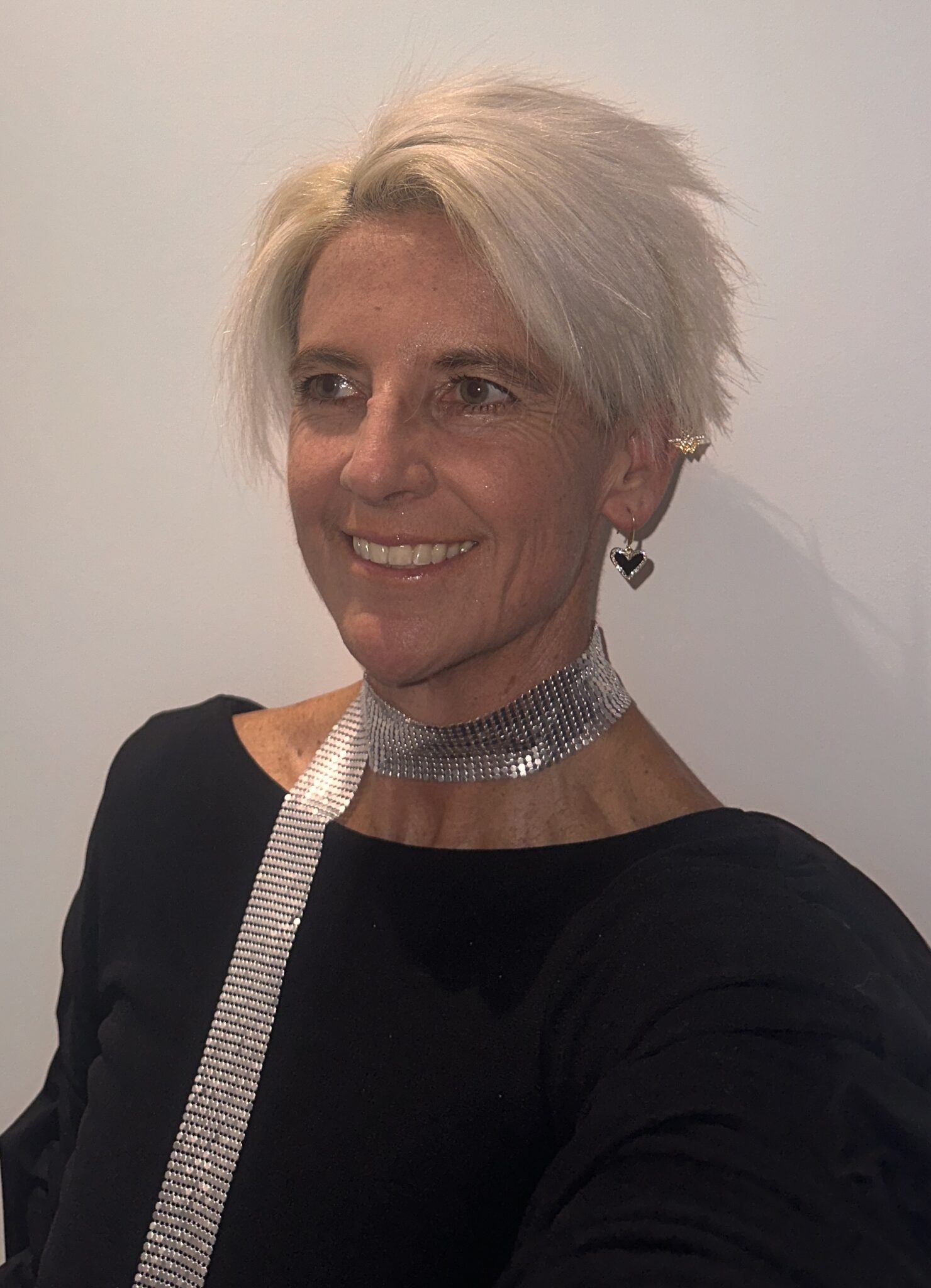
An interview with Danielle McCarthy: The Lived‑Experience Health Advocate
Biography
I am a storyteller, social worker in training, and public speaker who meets people where they are—with honesty, warmth, and lived experience. After 25 years as a teacher in senior management, I know how to hold a room gently yet with purpose, helping people make sense of complex emotions and find clarity, connection, and hope.
My work spans mental health promotion and research at WayAhead, deep involvement in Parkinson’s communities, and creative advocacy that brings real stories to light. In 2026, my first children’s book Meatball & Diana will be published, and I will present at the World Parkinson’s Congress in Phoenix as a Shake It Up! Foundation scholarship recipient. Across every space I enter, I bring a steady belief that stories matter, community heals, and people deserve to feel seen.
Please tell me a little about your background.
I have a strong academic foundation, holding a Bachelor of Education, multiple postgraduate certificates, a Master of Education, and I am currently completing a Master of Social Work (Qualifying). My 25‑year career as a Senior and Executive Teacher shaped my expertise in leadership, communication, and inclusive practice. I’ve expanded this through extensive professional learning in mental health, trauma‑informed practice, disability, and research. My lived experience, advocacy work, and ongoing postgraduate training position me as a thoughtful, ethical, and community‑centred emerging social worker.
Can you tell me more about your advocacy?
My advocacy spans mental health, disability, and Parkinson’s communities, where I use my lived experience to educate, influence, and inspire diverse audiences. I am a sought‑after public speaker, presenting to medical students, community groups, and national organizations on intersectionality, chronic illness, and mental health. My work includes policy engagement, fundraising leadership, research participation, and creative advocacy through film, writing, and art. My commitment to systemic change is matched by my ability to build connection, mobilise communities, and amplify the voices of those often unheard.
What is your passion and how did you get involved in Parkinson’s awareness and hope for a cure?
My passion for Parkinson’s awareness grew from a deeply personal place—caring for my father, navigating my own chronic health challenges, and witnessing firsthand how misunderstood and isolating neurological and mental health conditions can be. What began as family advocacy evolved into public speaking, research involvement, fundraising, and creative storytelling, allowing me to transform lived experience into education, connection, and hope.
Through my work with Parkinson’s NSW, the Michael J. Fox Foundation, Advanced Rehab Centre, and national community events, I found purpose in giving voice to the realities of Parkinson’s while championing dignity, inclusion, and early recognition. My studies in trauma‑informed practice strengthened this commitment, showing me how lived experience can become a powerful tool for healing and systemic change. Ultimately, I became involved in Parkinson’s advocacy because I don’t want others to endure what my family and I did—and I believe that awareness, research, and community action bring us closer to a future with better care and, one day, a cure.
What type of goals do individuals with Parkinson’s have when seeing your advocacy?
Individuals with Parkinson’s often see my advocacy as a source of hope, representation, and practical guidance—proof that their experiences are seen, valued, and worth fighting for. Families recognize in my work a voice that speaks to their quiet fears and daily realities, offering connection, understanding, and reassurance that they are not walking the path alone. Clinicians, researchers, and service providers view my advocacy as a bridge between lived experience and systemic change, motivating collaboration, innovation, and a shared commitment to better care. People without Parkinson’s are inspired by my courage, storytelling, and community leadership, finding in my message a call to action: that progress, compassion, and a future cure depend on all of us showing up together.
What type of training and how long are the programs?
I educate diverse audiences by sharing lived‑experience insights through keynote talks, medical student presentations, community forums, and national events, helping people understand the human reality behind Parkinson’s. My advocacy includes training clinicians, carers, and service providers by bridging research, trauma‑informed practice, and real‑world stories, making complex neurological concepts accessible and meaningful.
Through creative mediums—such as film, writing, art, and public storytelling—I expand public understanding of symptoms that are often invisible, including cognitive changes, hallucinations, and the emotional impact on families. My presence at fundraisers, research forums, and support groups also helps professionals and community members recognize the importance of early recognition, holistic care, and the collective hope for a cure.
What effect can your advocacy have on an individual with Parkinson’s?
My advocacy can have a profound emotional and practical impact on individuals, offering a sense of hope, validation, and connection at moments when people often feel unseen. By sharing my lived experience with honesty and courage, I help others feel less alone and more understood, reducing stigma and fear around Parkinson’s and mental health. My work empowers people to seek support, ask informed questions, and engage more confidently with services, research, and community networks. Most importantly, my presence shows individuals that progress is possible, and that a compassionate, informed community is walking beside them.
What would you like to see as a future goal for your advocacy?
A future goal for my advocacy is to broaden its reach so people of all ages—especially children and teens—can understand Parkinson’s with compassion, clarity, and hope. I want to continue strengthening partnerships across research, community services, and health sectors to improve early recognition, reduce stigma, and centre lived experience in every conversation about Parkinson’s.
A key ambition is to publish an accessible, age‑appropriate book that helps young people understand neurological conditions, family change, and resilience through storytelling. I also hope to expand my advocacy through artmaking—using film, visual art, and creative expression to communicate the emotional and human realities of Parkinson’s in ways that words alone cannot. Ultimately, my vision is for advocacy that educates, connects, and inspires a more informed, compassionate, and hopeful future for everyone affected by Parkinson’s.
What events do you participate in?
I participate in a wide range of events that blend community engagement, education, creativity, and lived‑experience leadership. These include major Parkinson’s fundraisers and research events such as the Move to Inspire Gala, the World Parkinson’s Congress, Step Up for Parkinson’s filming days, and multiple Macquarie University and NeuRA research forums.
I also speak at medical student conferences, mental health events, support groups, and community health forums, where I train and educate people through storytelling, research translation, and trauma‑informed insight. Alongside these in‑person events, I consistently use social media to share educational posts about Parkinson’s, mental health, and wellbeing—expanding my advocacy to a global audience and helping people understand the condition in accessible, everyday language.
How does this also assist caregivers?
My advocacy affects caregivers in profound and deeply personal ways, especially because I walk this journey not only as an advocate but as a daughter, sibling, and family member supporting my own mother and loved ones. By speaking openly about the emotional, physical, and relational realities of Parkinson’s, I give caregivers language, validation, and comfort for experiences they often carry silently. My honesty helps them feel less alone, reminding them that their exhaustion, grief, love, and resilience are seen and worthy of support. Most importantly, my presence shows caregivers—including my own family—that community, research, and compassion are moving with them, and that hope is something they never have to hold by themselves.
How can someone get in touch? What is your website?
Instagram: danimacca7, parkinsons_spark
Email: mccarthydani777@gmail.com
Facebook: Danielle McCarthy
LinkedIn: linkedin.com/in/danielle-mccarthy77
YouTube: @DanielleMcCarthy-j1p
ResearchGate: Danielle McCarthy
See me in the poster tour and art exhibition at WPC2026.
How can others also become advocates for awareness?
- Share lived experience with honesty and purpose.
Speaking openly—whether as someone with Parkinson’s, a caregiver, or an ally—creates understanding, reduces stigma, and inspires action. - Get involved in community events, research, and education.
Fundraisers, support groups, conferences, and awareness campaigns help people learn, connect, and contribute. Even small actions build momentum. - Use creativity and communication to educate others.
Advocacy can grow through social media, artmaking, writing, public speaking, or simply sharing reliable information. Using personal strengths helps build a more informed, compassionate community.
In your opinion, what is the key to effective advocacy?
Effective advocacy creates a ripple effect that reaches far beyond awareness alone. By sharing lived experience with honesty, courage, and clarity, I help people understand the emotional, cognitive, and relational realities of Parkinson’s—especially the symptoms that are often invisible. My work strengthens community connection, motivates collaboration between clinicians, researchers, carers, and organisations, and reminds people that progress is possible when lived experience leads the conversation. Most importantly, my advocacy brings hope into spaces where fear or uncertainty often sit, showing individuals and families that they are not alone and that a more compassionate, informed future is within reach.
How can we better fundraise to support a cure for Parkinson’s?
We can strengthen global fundraising by creating events that connect personal stories with scientific purpose, helping communities understand why research matters. Collaborating with organisations, researchers, and advocacy groups allows fundraising efforts to reach wider audiences and build long‑term support. Using social media and digital platforms amplifies campaigns, making it easier for people everywhere to donate, share information, and stay engaged. Most importantly, consistent, collective action—whether through local events, global challenges, or creative initiatives—helps accelerate progress toward better treatments and ultimately a cure.
What other activities do you undertake to support your daily living?
I support my daily living through a combination of structured therapies and self‑directed practices, including speech therapy, psychology, a wellness program with life‑coaching, and regular high‑intensity exercise such as PD Warrior and running. I also use alternative and body‑based regulation strategies—like grounding rituals, walking, music, being in nature, and creative expressions like poetry and photography—to stabilize my nervous system and energy throughout the day.
A home‑support worker assists with practical tasks, allowing me to maintain independence while balancing the emotional and physical demands of Parkinson’s. Alongside all of this, I juggle study, work, self‑care, and creativity, using movement, reflection, and community support to sustain my wellbeing. It is not easy.
Why should people who don’t have Parkinson’s care about this?
People who don’t have Parkinson’s should care because this isn’t just a medical issue—it’s a human one that affects families, workplaces, communities, and the future of ageing and healthcare. Understanding Parkinson’s builds empathy, reduces stigma, and helps create environments where people living with the condition can participate fully and safely. Better awareness drives stronger advocacy, funding, and research, which ultimately benefits everyone as we move toward better treatments and, one day, a cure. When people without Parkinson’s care, they help build a world where no one faces this condition alone.
Have you had any family members affected by Parkinson’s?
Yes. My father had early‑onset Parkinson’s at age 50. He is now 78. My cousin, who is four years older than me, has MS.
If you had one song that represents your life, what would it be?
The Horses by Daryl Braithwaite—uplifting, encouraging, and a reminder to fly and accept things as they are.
If you had one final statement for the Parkinson’s community, what would it be?
“Parkinson’s is not just a medical condition—it’s a human experience that deserves understanding, compassion, and action so no one has to face it alone.”
____________________________________________________________
TogetherForSharon® In memory of my mother, Sharon to voice awareness & hope for a Parkinson’s Disease cure. Sharon’s Son, George
Support https://www.togetherforsharon.com/shop/
Would you like to share your journey! Reach out and together our Voices are so much STRONGER!