
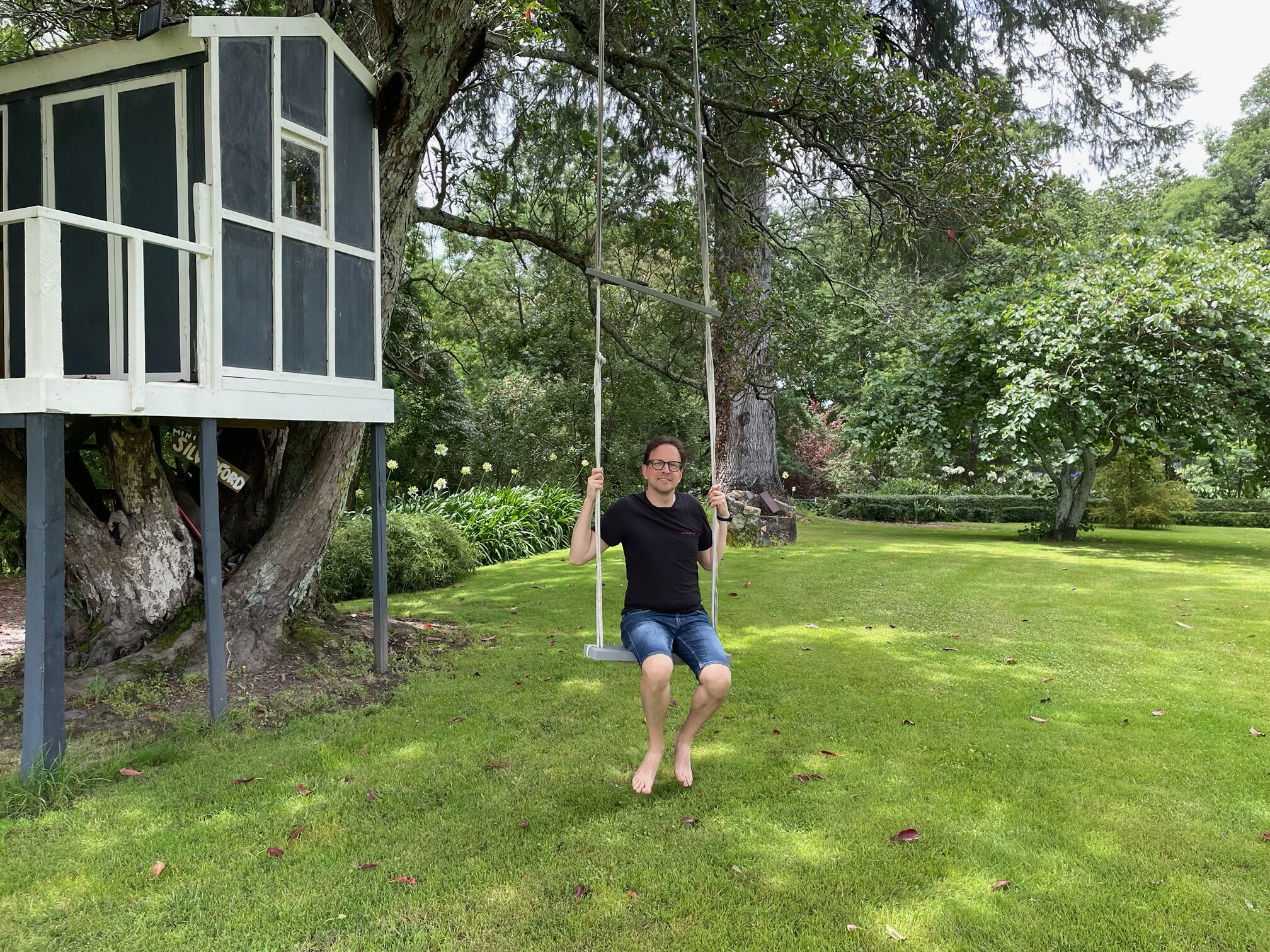
An interview with Daniel Heier, Shakin’ It Easy: Living Fully with Young-Onset Parkinson’s
Biography
I’ve lived quite an international life and have spent many years working with startups and entrepreneurs. Curiosity, travel, and meeting interesting people have always been a big part of who I am. After being diagnosed with young-onset Parkinson’s about five years ago, I started sharing parts of that journey in a light and honest way.
Can you tell me more about your Advocacy?
My advocacy is mainly about sharing the everyday reality of living with Parkinson’s in an honest and approachable way. I try to show that while the disease brings challenges, life can still be active, meaningful, and even joyful. If my story helps someone feel less alone or less afraid of the future, that already feels like a meaningful contribution.
What is your passion and how did you get involved in Parkinson’s awareness and hope for a cure?
My passion is helping people see that a Parkinson’s diagnosis does not mean life stops. After being diagnosed about five years ago, I realized that many conversations around Parkinson’s focus mainly on decline and limitations. Sharing a more balanced and hopeful perspective felt like a small way I could contribute.
What type of goals do individuals with Parkinson’s have when seeing your Advocacy?
Many people with Parkinson’s are looking for reassurance that life is not over after diagnosis. They want to see that it is still possible to stay curious, travel, connect with others, and continue living a meaningful life despite the challenges. Just as importantly, they want to recognize themselves in someone else’s story and feel less alone in what they are going through.
What type of training and how long are the programs?
I don’t run formal training or structured programs. My advocacy is simply about sharing personal experiences and perspectives from daily life with Parkinson’s. Sometimes honest storytelling and small insights can resonate just as strongly as formal programs.
What effect can your Advocacy have on an individual with Parkinson’s?
Seeing someone else openly living with Parkinson’s can sometimes reduce fear and uncertainty. It can remind people that even with the challenges of the disease, life can still include curiosity, humor, and meaningful experiences. If my story helps someone feel a little less alone, that already means a lot.
What would you like to see as a future goal for your Advocacy?
My hope is that conversations around Parkinson’s become more open and less defined by fear or stigma. I would also love to contribute to practical ideas that make everyday life a little easier for people living with the condition. Some of those ideas are still very early, but it’s something I care deeply about.
What events do you participate in?
I participate in research studies related to Parkinson’s and attend monthly young-onset Parkinson’s meetups to connect with others living with the condition. Those gatherings are a great way to share experiences, learn from one another, and stay connected with the community. They remind me how important peer support can be.
How does this also assist the caregivers?
Many people think immediately about caregiving when they hear Parkinson’s, but for many of us the journey is long and active. Showing that life can continue in meaningful ways can also reassure partners and families. It helps them see that Parkinson’s is part of life, but it doesn’t define the whole story.
How can someone get in touch? What is your website?
The easiest way to reach me is through my social media channels. I’m most active on Instagram and TikTok at @shakiniteasy, where people can also follow along with my journey.
How can others also become advocates for awareness?
Advocacy doesn’t have to be something big or formal. Sharing your story, supporting someone who lives with Parkinson’s, or simply helping spread accurate information can already make a real difference. Awareness grows one conversation at a time.
If you could add any questions to this interview that you may want others to learn about, what would the question(s) be?
One question I would add is: “What surprised you most after your Parkinson’s diagnosis?” For many people, including me, it’s discovering how resilient the human mind can be. Life may change, but you also learn how adaptable and strong people can be.
In your opinion, what is the key to effective advocacy?
Authenticity. People connect with honest experiences far more than with perfect messaging. When someone shares their real story, it creates understanding and empathy much more naturally.
How can we better fundraise to support a cure for Parkinson’s?
I think storytelling plays an important role. When people understand the real human impact of Parkinson’s, they are more motivated to support research and fundraising efforts. Awareness and empathy often inspire action.
What other activities do you undertake to help improve and support your daily living Eg exercise and alternative remedies?
Exercise is definitely not my favorite activity, but I do it because I know it’s good for me. I go to physiotherapy twice a week and try to make it to the gym as well – a bit like eating salad: not always exciting, but good for you, even if you’d sometimes rather be reading a book on the couch. I also started archery about two years ago and absolutely love it, although I had to pause for a while after breaking my shoulder skiing in Norway last year – no risk, no fun, even with Parkinson’s!
Why should people who don’t have Parkinson’s care about this?
Parkinson’s affects millions of people and their families around the world. Greater awareness helps reduce stigma and supports research toward better treatment and hopefully one day a cure. Even if someone isn’t personally affected today, chances are they will know someone who is at some point in their life.
Have you had any family members or relatives affected by Parkinson’s disease?
A cousin of my father developed Parkinson’s later in his life, but otherwise there is no known history of the disease in my family.
If you had one song that would tell us more about you or represent your life, which song would it be?
“Don’t Worry, Be Happy” It’s a simple reminder not to take life too seriously and to keep a sense of humor even when things get challenging.
If you had one final statement or quote you could leave for the Parkinson’s community, what would it be?
Parkinson’s may change parts of your life, but it doesn’t take away your ability to keep living, exploring, and finding joy. Be patient with yourself, stay curious, and try not to lose your sense of humor along the way.
_________________________________
TogetherForSharon® In memory of my mother, Sharon to voice awareness & hope for a Parkinson’s Disease cure. Sharon’s Son, George
Support https://www.togetherforsharon.com/shop/
Would you like to share your journey! Reach out and together our Voices are so much STRONGER!