Air Pollution, the Environment, and Parkinson’s Disease
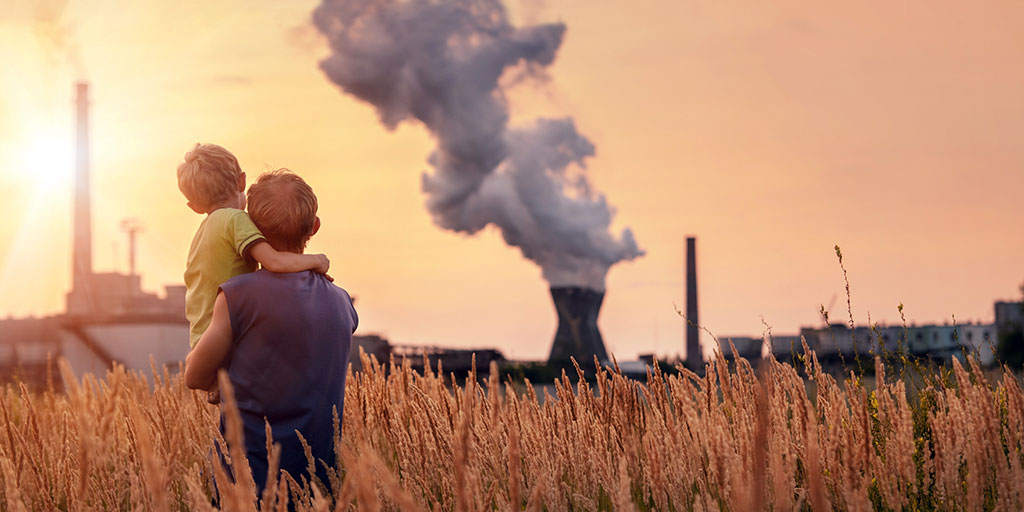
Air pollution is a serious environmental health issue that impacts the brain in addition to the heart and lungs. It’s normal for families who have lost a loved one to Parkinson’s disease—like my mother, Sharon—to wonder if environmental factors like contaminated air may have played a role.
Most people agree that Parkinson’s disease is a multifactorial condition, which means that rather than having a single cause, it results from a mix of aging, genetics, and environmental factors. A growing body of research indicates that environmental variables, such as air pollution, may have a role in the onset and course of the disease (Chen et al., 2017).
A variety of dangerous elements, such as ozone, nitrogen dioxide (NO₂), fine particulate matter (PM2.5), and ultrafine particles, make up air pollution. PM2.5 is particularly hazardous since its particles are small enough to penetrate the bloodstream and be profoundly breathed into the lungs. After entering the bloodstream, these particles may exacerbate oxidative stress and inflammation, two conditions linked to neurodegeneration. Long-term exposure to air pollution was linked to an increased risk of Parkinson’s disease, according to a large cohort study, indicating that environmental air quality may have a significant impact on neurological health (Palacios et al., 2017).
According to scientists, there are a number of biochemical ways that air pollution may impact the brain. One method is chronic inflammation, in which exposure to contaminants sets off an immunological reaction that gradually harms healthy cells. Another is oxidative stress, which can damage neurons and make them less functional. Furthermore, according to some research, inhaled particles may get straight to the brain via the olfactory system, or sense of smell, and may be a factor in the early neurological damage associated with Parkinson’s disease (Block & Calderón-Garcidueñas, 2009). The progressive loss of dopamine-producing neurons in the brain is a hallmark of Parkinson’s disease, which makes these processes important.
Because environmental exposure is common and frequently unavoidable, it is very significant. Millions of Americans reside in places whose air quality does not reach recommended criteria, according to the U.S. Environmental Protection Agency (EPA) (EPA, 2023). Cardiovascular disease, pulmonary conditions, and cognitive decline have already been connected to long-term exposure to contaminated air. According to an increasing number of studies, these exposures may also have an impact on neurological disorders including Parkinson’s disease (Lee et al., 2016).
It’s crucial to answer this question honestly and thoughtfully for your family. It is impossible to prove that air pollution caused your mother’s Parkinson’s disease, even though it may have increased environmental risk overall. However, empirical data demonstrates that exposure to environmental factors, such as industrial pollutants, pesticides, and air pollution, can eventually increase susceptibility to neurodegenerative illnesses. The significance of ongoing awareness, activism, and study into environmental health risks is further highlighted by your experience.
Preventing and Minimizing Exposure
There are significant actions that people and families may take to lower risk, even though exposure to air pollution cannot be totally eliminated. Making decisions about outdoor activities every day can be aided by using tools like the Air Quality Index (AQI) to monitor local air quality. Limiting outdoor activity, particularly near busy roads or industrial areas, can help lower exposure on days when pollution levels are high.
Enhancing interior air quality is similarly crucial. Home air quality can be greatly improved by using high-efficiency particulate air (HEPA) filters, keeping ventilation systems clean, and avoiding indoor contaminants including tobacco smoke, excessive candle usage, and poorly ventilated gas appliances. Wearing a properly fitted mask (such as N95) may help lessen inhalation of hazardous particles in high-exposure situations, such as during wildfires or significant pollution events.
It’s also critical to limit exposure to other environmental pollutants. The total hazardous burden can be reduced by minimizing the use of pesticides, carefully cleaning fruits and vegetables, and, whenever feasible, choosing organic or low-chemical products. Overall neurological health can also be supported by frequent medical examinations, a balanced diet high in antioxidants, and continued physical activity.
Prevention also entails community and policy action on a larger scale. Pollution at the population level can be decreased by promoting renewable energy projects, more stringent air quality laws, and environmental safeguards. Advocacy campaigns, particularly those related to Parkinson’s awareness, can be very effective in promoting safer surroundings and increased investigation into environmental causes of illness.
References
Block, M. L., & Calderón-Garcidueñas, L. (2009). Air pollution: Mechanisms of neuroinflammation and CNS disease. Trends in Neurosciences, 32(9), 506–516. https://doi.org/10.1016/j.tins.2009.05.009
Chen, H., Kwong, J. C., Copes, R., Hystad, P., van Donkelaar, A., Tu, K., Brook, J. R., Goldberg, M. S., Martin, R. V., Murray, B. J., Wilton, A. S., & Burnett, R. T. (2017). Exposure to ambient air pollution and the incidence of Parkinson’s disease: A population-based cohort study. Environmental Health Perspectives, 125(8), 087026. https://doi.org/10.1289/EHP422
Lee, P. C., Roberts, A. L., Paul, K. C., Ritz, B., & Weisskopf, M. G. (2016). Ambient air pollution exposure and risk of Parkinson’s disease. Environmental Health Perspectives, 124(11), 1759–1765. https://doi.org/10.1289/EHP184
Palacios, N., Fitzgerald, K. C., Hart, J. E., Weisskopf, M. G., Schwarzschild, M. A., Ascherio, A., & Laden, F. (2017). Air pollution and risk of Parkinson’s disease in a large prospective study of men. Environmental Health Perspectives, 125(8), 087011. https://doi.org/10.1289/EHP259
U.S. Environmental Protection Agency. (2023). Air quality statistics report. https://www.epa.gov/air-trends
_____________________________________________
Want to share a Blog on a PD topic? Reach out to togetherforsharon@gmail.com
TogetherForSharon® In memory of my mother, Sharon to voice awareness & hope for a Parkinson’s Disease cure
Do you have a story to tell, a journey to share, or a blog you’d like to write?
We are always looking for writers, bloggers, and Parkinson’s advocates who want to team up and raise awareness together.
If you’re interested, please email us at togetherforsharon@gmail.com.
You can also explore our blog here:
https://togetherforsharon.com/parkinsons-blogs/