Agent Orange and Parkinson’s Disease: The Lasting Impact of Toxic Exposure
Parkinson’s disease is a degenerative neurological condition that impairs numerous non-motor abilities as well as movement, balance, and coordination. While some Parkinson’s disease cases are genetically influenced, there is mounting scientific evidence that environmental toxicants play a role in the development of neurodegenerative diseases. Agent Orange, a chemical herbicide that was widely deployed during the Vietnam War, is one of the most well-known environmental exposures linked to long-term health issues.
Concerns about the long-term neurological effects of Agent Orange exposure have been voiced for decades by veterans, scientists, and medical professionals. Parkinson’s disease and Parkinson-like symptoms may be exacerbated by exposure to hazardous substances found in Agent Orange, according to a growing body of scientific research. It is crucial to comprehend the link between Agent Orange and Parkinson’s disease in order to support veterans and communities impacted by environmental contamination, as well as to advance medical research.
Agent Orange: What Was It?
During the Vietnam War, the U.S. military employed Agent Orange, a tactical herbicide, to eliminate dense vegetation and destroy crops that would give enemy forces resources or cover. Two herbicides, 2,4-D and 2,4,5-T, made up the majority of the chemical mixture. TCDD (2,3,7,8-tetrachlorodibenzo-p-dioxin), a very dangerous pollutant, was created as a byproduct of manufacturing.
One of the most hazardous environmental substances ever investigated is dioxin. Its chemical stability and fat solubility allow it to endure for extended periods of time in soil, water, and bodily tissues. Direct spraying, tainted water, food sources, and environmental interaction exposed military soldiers, Vietnamese people, and nearby towns.
For qualified veterans who served in impacted areas, the US Department of Veterans Affairs acknowledges Parkinson’s disease as a disability linked to Agent Orange exposure.
Agent Orange and the Risk of Parkinson’s Disease
The question of whether exposure to dioxin and Agent Orange contributes to the development of Parkinson’s disease has drawn more attention from researchers. Exposure to hazardous herbicides may raise the risk of neurological diseases in later life, according to epidemiological research involving veterans and exposed populations.
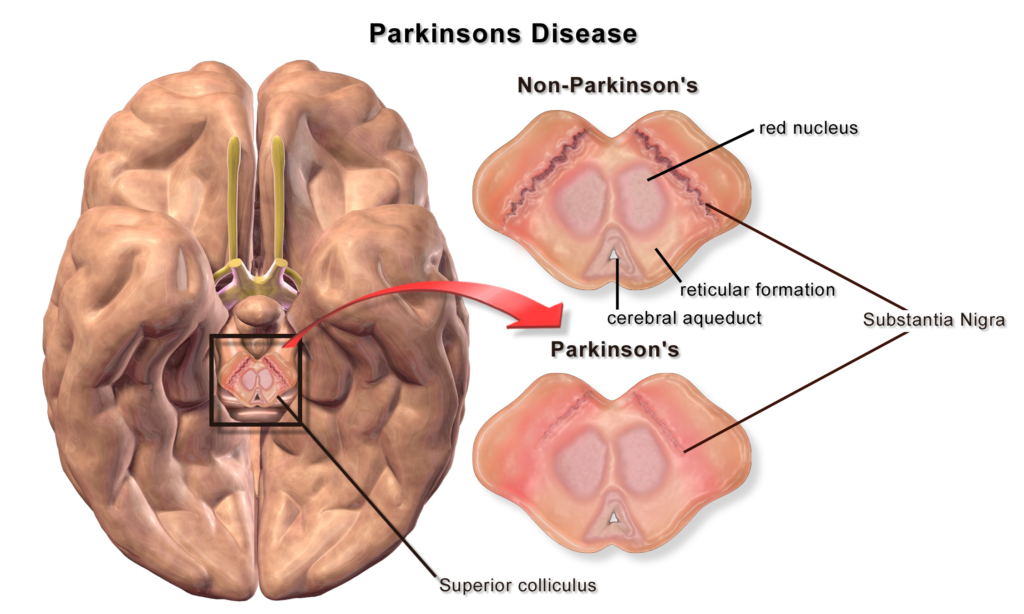
When dopamine-producing neurons in the brain’s substantia nigra gradually deteriorate, Parkinson’s disease results. Through oxidative stress, inflammation, and disruption of cellular function, scientists think dioxin and related hazardous chemicals may lead to brain injury (Pouchieu et al., 2018).
Veterans who were exposed to Agent Orange have reported experiencing symptoms similar to Parkinson’s disease or Parkinsonism, including tremors, rigidity, slowed movement, and balance issues. Researchers are still investigating how aging, genetics, and other environmental factors interact with long-term hazardous exposure to affect disease risk.
Neurodegeneration, Oxidative Stress, and Dioxin
Oxidative stress is a key mechanism that connects exposure to Agent Orange to brain impairment. Free radicals, which are unstable chemicals that harm proteins, DNA, and neuronal membranes, can be produced more frequently when dioxins are present. Due to their high metabolic needs and susceptibility to oxidative damage, dopamine-producing neurons are particularly vulnerable.
Neuroinflammation is another significant pathway. Toxic chemical exposure may trigger immunological reactions in the brain, resulting in persistent inflammation that eventually deteriorates neurons. It is becoming more well acknowledged that persistent neuroinflammation plays a significant role in the development of Parkinson’s disease (Kim et al., 2020).
Additionally, exposure to dioxins may impair mitochondrial activity. Cells use mitochondria to provide energy, and damage to these organelles can lead to neural degeneration and malfunction. Parkinson’s disease pathogenesis is closely linked to mitochondrial abnormalities.
Veterans and Prolonged Health Issues
Decades after serving in the military, many Vietnam veterans still struggle with severe health issues brought on by Agent Orange exposure. Exposure has been linked to a number of malignancies, diabetes, cardiovascular disease, and other chronic illnesses in addition to Parkinson’s disease.
Some veterans now have access to healthcare benefits and disability payments through the Department of Veterans Affairs due to Parkinson’s disease being recognized as a service-connected ailment. Nonetheless, a lot of people are still pushing for increased knowledge, funding for study, and assistance for impacted veterans and their families.
Parkinson’s disease can also have a major emotional and psychological impact. In addition to those who have been diagnosed with the illness, caregivers and loved ones are frequently affected by progressive motor symptoms, cognitive abnormalities, and decreased independence.
Lessons in Public Health and the Environment
The history of Agent Orange brings to light more general worries about long-term brain health and environmental toxins. Exposure to military personnel, industrial chemicals, insecticides, and herbicides may have long-term effects. Dioxin persistence in ecosystems highlights the significance of long-term public health monitoring, chemical safety testing, and environmental management.
To enhance prevention efforts and identify vulnerable populations, researchers are still investigating the role that hazardous exposures play in neurodegenerative illnesses. Public health programs that concentrate on pollution control, environmental remediation, and workplace safety may help lower the risks of exposure to dangerous chemicals in the future.
In conclusion
One of the most notable instances of environmental hazardous exposure connected to long-term health effects, such as Parkinson’s disease, is Agent Orange. There is growing scientific evidence that dioxin exposure linked to Agent Orange may be a factor in Parkinson’s disease-related oxidative stress, neuroinflammation, mitochondrial dysfunction, and dopamine neuron degeneration. Current findings emphasize the significance of environmental awareness, veteran healthcare support, and preventative public health initiatives, even if more research is still required to completely understand the association between hazardous pesticide exposure and neurodegeneration. For people and communities impacted by hazardous environmental exposures, ongoing advocacy and research may help improve outcomes.
References
Kim, K. H., Kabir, E., & Jahan, S. A. (2020). Exposure to pesticides and the associated human health effects. Science of the Total Environment, 575, 525–535. https://doi.org/10.1016/j.scitotenv.2016.09.009
Pouchieu, C., Piel, C., Carles, C., Gruber, A., Helmer, C., Tual, S., … Baldi, I. (2018). Pesticide use in agriculture and Parkinson’s disease in the AGRICAN cohort study. International Journal of Epidemiology, 47(1), 299–310. https://doi.org/10.1093/ije/dyx225
Schecter, A., Birnbaum, L., Ryan, J. J., & Constable, J. D. (2006). Dioxins: An overview. Environmental Research, 101(3), 419–428. https://doi.org/10.1016/j.envres.2005.12.003
Yi, S. W., Ohrr, H., Hong, J. S., Yi, J. J., & Agent Orange Exposure and Disease Prevalence Research Team. (2014). Agent Orange exposure and disease prevalence in Korean Vietnam veterans: The Korean Veterans Health Study. Environmental Research, 133, 56–65. https://doi.org/10.1016/j.envres.2014.05.015
Photo Credit https://ptsdlawyers.com/parkinsons-disease/