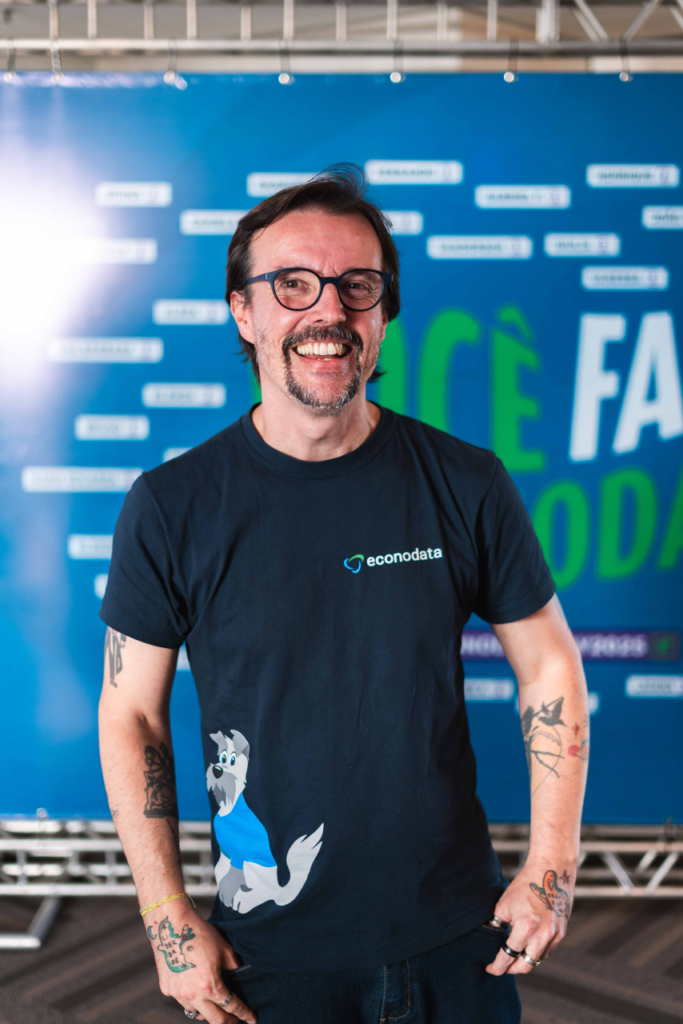
An interview with Tulipa Mais, From Diagnosis to Advocacy: Building Hope and Connection Through Parkinson’s Awareness in Brazil.
Biography
I’m Luis Rocha, father of Chico and Elis, a contributor to Associação Campinas Parkinson, and a marketing specialist. I currently live in Campinas, São Paulo, Brazil. I was diagnosed with early-onset Parkinson’s disease in 2021, at age 43. This experience led me to put my communication and digital strategy skills to work raising awareness and advocating for rights related to Parkinson’s.
Can you tell me more about your Advocacy?
I’m the creator of Tulipa+, a Brazilian digital initiative that turns Parkinson’s science into clear, practical information for people living with the condition, caregivers, and society at large. The work brings together health education, everyday experiences, rights and citizenship, and social awareness, with a commitment to evidence, dignity, and responsible communication.
What is your passion and how did you get involved in Parkinson’s awareness and hope for a cure?
My passion is making reliable, useful information accessible, especially to people facing a diagnosis who don’t know where to turn. After my own diagnosis, I realized how much accessible information and community support matter. I want to help people find knowledge, connection, and realistic hope, while supporting progress toward better treatments and a cure.
What type of goals do individuals with Parkinson’s have when seeing your Advocacy?
I hope people come away with a better understanding of Parkinson’s, more confidence to ask questions, and practical information to discuss with their healthcare team. I also want them to feel less alone, know their rights, and understand that their experiences deserve to be heard and that they are more than a diagnosis.
What type of training and how long are the programs?
At present, Tulipa+ does not offer a formal training or certification program, so there is no set duration. Our educational work is ongoing and takes place through accessible content in formats such as carousels, videos, interviews, and conversations with the community.
What effect can your Advocacy have on an individual with Parkinson’s?
Effective awareness and advocacy can reduce isolation, challenge stigma, and help people recognize that Parkinson’s affects much more than movement. By making scientific evidence and practical information easier to understand, I hope Tulipa+ helps people prepare for conversations with healthcare professionals and take a more active role in decisions about their care.
What would you like to see as a future goal for your Advocacy?
I want Tulipa+ to become a trusted, accessible reference for information and advocacy, serving people with Parkinson’s, caregivers, healthcare professionals, and associations throughout Brazil. This means expanding reliable educational resources, strengthening ties with local communities, and bringing the lived experiences of people with Parkinson’s into public discussions, research, and health policy.
What events do you participate in?
I take part in online awareness campaigns, community conversations, and public discussions about inclusion and the needs of people with Parkinson’s. In 2026, I contributed to a discussion on inclusion at the Campinas City Council and shared Tulipa+’s work at three major Brazilian neurology congresses. I was one of the ambassadors for the Porto Alegre edition of the international Run for Parkinson’s project and for the second edition of the Jogos de Integração do Parkinson (Parkinson Integration Games), held in Joinville, Santa Catarina. I also contribute to Associação Campinas Parkinson, a nonprofit organization that has served the local community for 19 years.
How does this also assist the caregivers?
Caregivers also need clear information, recognition, and a place in conversations about Parkinson’s. Tulipa+ aims to help them understand symptoms and everyday challenges, prepare questions for appointments, find support, and remember that caring for someone else does not mean having to face the journey without help.
How can someone get in touch? What is your website?
The main public contact channel is Instagram: @tulipamais (https://www.instagram.com/tulipamais/). Official website: [www.tulipamais.com.br].
How can others also become advocates for awareness?
Start by listening to people living with Parkinson’s, sharing reliable information, and respectfully challenging myths. You can also support local associations, take part in awareness events, advocate for accessibility and fair access to care, and help ensure advocacy efforts reflect the needs of the community without speaking over the people directly affected.
If you could add any questions to this interview that you may want others to learn about, what would the question(s) be? And what is your response?
I would add a question about what it means to have hope when a cure is not yet within reach. To me, hope includes scientific progress, but also access to treatment, informed care, dignity, social inclusion, and a better quality of life today.
In your opinion, what is the key to effective advocacy?
Effective advocacy combines lived experience, reliable evidence, listening, and concrete action. It must put people with Parkinson’s at the center of the conversation, communicate honestly about what is known and what remains unknown, and turn awareness into better services, rights, research, and inclusion in everyday life.
How can we better fundraise to support a cure for Parkinson’s?
Fundraising campaigns work best when their goals are clear, donations are used transparently, and supporters can see how the money contributes to credible research. Community campaigns should complement sustained investment by public agencies, foundations, and responsible private partners, without promising a cure within a timeline science cannot guarantee.
What other activities do you undertake to help improve and support your daily living Eg exercise and alternative remedies?
Living with Parkinson’s has taught me that daily management is personal and should be discussed with one’s healthcare team. Through my awareness work, I encourage people to speak with their healthcare professionals about exercise, rehabilitation, and complementary approaches, without replacing prescribed treatment with unproven practices. I also enjoy playing the guitar and try to practice for 15 minutes a day.
Why should people who don’t have Parkinson’s care about this?
Parkinson’s affects families, workplaces, communities, and healthcare systems, and many of its symptoms are invisible to others. Everyone has a stake in a society that treats people with dignity, protects their rights, supports caregivers, and invests in research that can improve lives.
Have you had any family members or relatives affected by Parkinson’s disease?
I’m not aware of any members of my family having Parkinson’s disease. My mother and maternal grandmother experienced Alzheimer’s disease in the later years of their lives.
If you had one song that would tell us more about you or represent your life, which song would it be?
I would choose “Emoções” (“Emotions”), by Roberto Carlos. The idea that the emotions we experience are what matter aligns with my belief that a person’s life is much bigger than a diagnosis.
If you had one final statement or quote you could leave for the Parkinson’s community, what would it be?
People with Parkinson’s are much more than a diagnosis: we are people with plans, rights, ideas, and a future. Until a cure arrives, no one should have to face this journey without information, dignity, and community.
TogetherForSharon® In memory of my mother, Sharon to voice awareness & hope for a Parkinson’s Disease cure. Sharon’s Son, George
Support https://www.togetherforsharon.com/shop/
Would you like to share your journey! Reach out and together our Voices are so much STRONGER!