The Tackling Tough Topics BLOG: “Secondary Parkinson’s”: The term that should be coined….
I was not diagnosed with Parkinson’s disease.
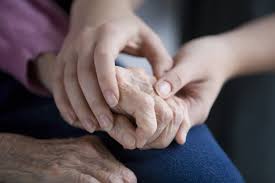
But for four years, I held my mother’s hand during her battle each and every moment.
During the final years of my mother’s battle, I was by her side 24/7—holding her hand, advocating for her care, learning her medications, watching her movements change, and absorbing the emotional toll that Parkinson’s quietly places on an entire family. Those years reshaped me in ways I’m still unpacking.
That’s why I believe we need a new term: Secondary Parkinson’s.
In my professional background in Criminal Justice, we often refer to family members as “secondary victims.” These are individuals who were not directly targeted by a crime, but whose lives are profoundly altered by it. The trauma, stress, grief, and long-term impact are, even if they aren’t always recognized.
Parkinson’s disease works the same way.
When someone you love is diagnosed, the disease doesn’t stop with them. It enters the home. It dictates routines. It reshapes conversations. It alters futures. Care partners and family members become advocates, nurses, researchers, and emotional anchors—often overnight, and often without training or support.
Secondary Parkinson’s is not about claiming the disease itself. It’s about acknowledging the shared experience of living alongside it.
Care partners experience chronic stress, sleep deprivation, anticipatory grief, anxiety, depression, and burnout. They learn to read subtle changes in movement, mood, and cognition. They mourn small losses long before the final goodbye. They live in a constant state of vigilance—always watching, always adjusting.
And yet, their experience is frequently minimized.
“How is she doing?”
Rarely: “How are you holding up?”
I didn’t just witness Parkinson’s—I carried it with her. I felt it in the exhaustion of long nights, the fear of falls, the heartbreak of watching someone vibrant slowly lose pieces of themselves. I felt it in the silence after doctor appointments and in the quiet moments where strength was required simply to keep going.
That is Secondary Parkinson’s.
It’s the invisible diagnosis that millions of care partners live with every day. It doesn’t come with a medical chart, but it comes with real consequences. Relationships change. Careers are paused. Identities shift. And after loss, the grief doesn’t just disappear—it lingers, often without a name. Six years later I often do not sleep reliving it all daily.
Naming something matters.
When we name Secondary Parkinson’s, we validate care partners. We create space for support, mental health resources, and community. We acknowledge that advocacy doesn’t only come from those diagnosed—it comes from those who walk beside them, love them fiercely, and refuse to let their voices fade.
My mother, Sharon, lived with Parkinson’s with courage. Being her son and her care partner changed my life forever. While I may not carry the diagnosis, I carry the experience—and it fuels my commitment to advocacy, awareness, and policy change.
Parkinson’s is not an individual disease.
It is a family disease.
And Secondary Parkinson’s deserves to be seen.
If you are a care partner, know this: your experience is real, your exhaustion is valid, and your voice matters too. You are not secondary in importance—only in name.
And together, by naming it, we can finally start supporting everyone Parkinson’s touches.
_____________________________________________
Want to share a Blog on a PD topic? Reach out to togetherforsharon@gmail.com
TogetherForSharon® In memory of my mother, Sharon to voice awareness & hope for a Parkinson’s Disease cure
Do you have a story to tell, a journey to share, or a blog you’d like to write?
We are always looking for writers, bloggers, and Parkinson’s advocates who want to team up and raise awareness together.
If you’re interested, please email us at togetherforsharon@gmail.com.
You can also explore our blog here:
https://togetherforsharon.com/parkinsons-blogs/
——————————————–
Dr. George Ackerman is from Brooklyn, N.Y. He now resides in Florida and works in the fields of law, police, and education. George lost his mother, Sharon Riff Ackerman, on 1/1/2020 due to Parkinson’s Disease.
George wanted to honor his mother and continue to help in the Parkinson’s awareness cause, but he did not know how to bring about change. With my family, we started TogetherForSharon® to keep my mother, Sharon Riff Ackerman, ‘s memory alive and share the message of Parkinson’s Awareness and hope for a cure.
Today, https://www.togetherforsharon.com/ reaches thousands of individuals across the country to raise awareness of Parkinson’s disease. George currently interviews individuals throughout the Parkinson’s community, including various foundations, caregivers, and Parkinson’s warriors, to help share their stories and causes.