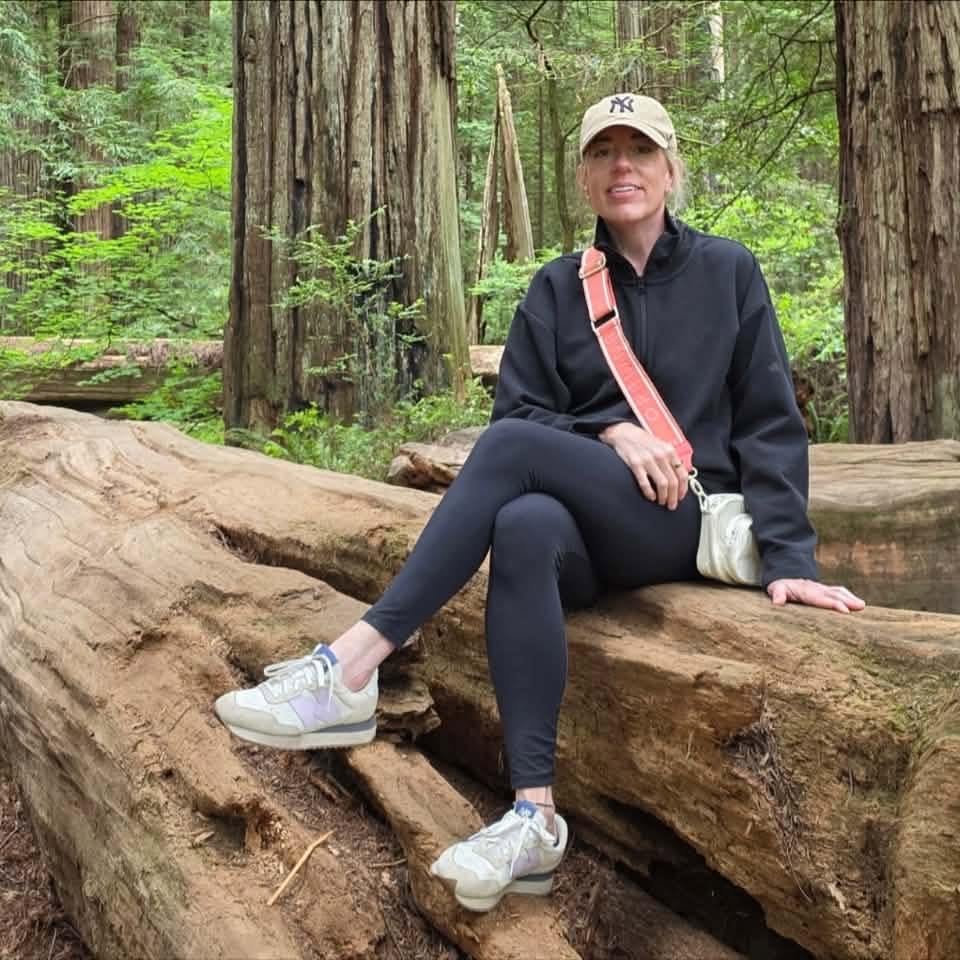
An interview with Brittany Letterman: Parkinson’s Does not Define Me—and It Never Will
Biography
I am 42 years old and was diagnosed with young-onset Parkinson’s disease at age 36 after first noticing a finger tremor in March 2020. My symptoms progressed to a full left-sided tremor, dystonia in my left foot, some slowness of movement, and smaller handwriting, but I continue to feel well and live an active life. As I enter my seventh year with Parkinson’s, I remain focused on health and wellness, maintaining my quality of life, and never allowing the diagnosis to define who I am.
Please tell me a little about your background.
I am a mother of three adult sons 19, 21, &24,I am a special education teacher for students in grades six through eight with a strong focus on math instruction, and a business owner who helps manage a flooring company serving national accounts. I am also currently enrolled in a master’s program in special education. My family, friendships, education, travel, exploring new places, and trying new experiences are all important parts of my life.
Can you tell me more about your Advocacy?
My advocacy has been personal and informal rather than public or organized. I speak openly about my diagnosis with the people in my life and try to help them understand that Parkinson’s affects everyone differently and does not always look the way people expect. I have mostly stayed away from discussing it on social media, but I am beginning to share more of my story and will attend my first Parkinson’s event this August in St. Louis through the Michael J. Fox Foundation.
What is your passion and how did you get involved in Parkinson’s awareness and hope for a cure?
My passion is living a full and meaningful life while helping others understand that Parkinson’s looks different for every person. I became involved in awareness simply by speaking openly about my diagnosis and sharing my experience, with the hope that greater understanding, research, and continued advocacy will eventually lead to better treatments and a cure.
What type of goals does individuals with Parkinson’s have when seeing your Advocacy?
I hope people with Parkinson’s feel less alone and understand that there is no single way the disease is supposed to look or progress. I want them to feel encouraged to focus on their own goals, continue living fully, and avoid comparing their journey to someone else’s.
What type of training and how long are the programs?
I do not currently offer formal training or structured advocacy programs. My involvement is centered on sharing my personal experience and helping others better understand the realities of living with Parkinson’s.
What effect can your Advocacy have on an individual with Parkinson’s?
I hope my story encourages people with Parkinson’s not to be afraid to think outside the box or assume that one mainstream approach is the only option. Reading medical studies and research is an important tool, and keeping an open mind can help people become more informed about their own care.
What would you like to see as a future goal for your Advocacy?
My future goal is to share my story more openly with those I do not know so that people who are newly diagnosed can see that there is no single way to live with Parkinson’s. I have taken a different path by focusing on health, wellness, and alternative therapies rather than immediately beginning Parkinson’s medication, and I hope my experience encourages others to work with their healthcare providers to find the approach that is right for them. Every person’s symptoms, progression, and needs are different, and I want others to understand that their journey does not have to look like anyone else’s.
What events do you participate in?
I am going to my first event in August. It is in Saint Louis, Missouri and is being hosted by the Michael J fox foundation it is called Parkinson’s IQ event. As time allows, I am hoping to participate in more of these types of events like the World Parkinson’s event.
How does this also assist the caregivers?
My story may help caregivers understand that Parkinson’s affects everyone differently and that there is not one path that works for every person. I hope it encourages them to listen, remain open-minded, and support their loved one in becoming informed and involved in decisions about their care.
How can someone get in touch? What is your website?
Anyone can reach me by e-mail at brittany.letterman@gmail.com
https://www.facebook.com/brittany.letterman.1/
queen_b_of_commanderflooring -instagram
https://www.facebook.com/commanderflooringLLC/
@brittanynicole8484 – TikTok
How can others also become advocates for awareness?
Others can become advocates by listening to people with Parkinson’s and recognizing that every person’s experience is different. By hearing their stories, people can learn practical ways individuals manage symptoms, understand the emotional side of the disease, and share more accurate awareness with others.
What has been the most helpful tool, therapy, habit, or mindset in managing your Parkinson’s symptoms?
Was there a particular time, illness, injury, stressor, or possible environmental exposure that seemed to coincide with the beginning or worsening of your symptoms? I would also ask what similarities people notice across their stories, because comparing experiences may help raise useful questions for future research without assuming that any one factor caused the disease.
In your opinion, what is the key to effective advocacy?
The key to effective advocacy is listening to people with Parkinson’s and allowing their individual experiences to be heard without forcing everyone into the same narrative. Honest stories, accurate information, and open conversations can create greater understanding and stronger support.
How can we better fundraise to support a cure for Parkinson’s?
Fundraising should feel more personal, transparent, and connected to the people living with Parkinson’s. Sharing real stories, organizing community events, and clearly showing how donations support research can help people understand why their contributions matter and inspire them to become more involved.
What other activities do you undertake to help improve and support your daily living Eg exercise and alternative remedies?
I use a combination of supplements, peptides, regular exercise, careful nutrition, and a very consistent sleep schedule to support my daily health and manage my symptoms. I also try to keep stress as low as possible, although that can be challenging while balancing my business, teaching career, and graduate studies. I believe mindset and the way we speak about ourselves can strongly influence how we feel each day, so I try not to let the disease become part of my identity or refer to it as “my Parkinson’s.”
Why should people who do not have Parkinson’s care about this?
I believe people should care because Parkinson’s is one of the fastest-growing neurological disorders worldwide, and it can affect people at any age. I am living proof that it is not only a disease of older adults. At some point, nearly everyone will know someone affected by Parkinson’s, whether it is a family member, friend, coworker, or even themselves.
Have you had any family members or relatives affected by Parkinson’s disease?
Yes, my diagnosis and it does affect my family.
If you had one song that would tell us more about you or represent your life, which song would it be?
“I Won’t Back Down” — Tom Petty and the Heartbreakers
If you had one final statement or quote you could leave for the Parkinson’s community, what would it be?
“Never lose hope that better treatments—and one day a cure—are on the horizon very soon. Until then, keep kicking Parkinson’s ass, keep checking experiences off your bucket list because that is the definition of living, and be as proactive as possible about your health. Stay open to new possibilities, because there is still so much hope ahead for all of us. -We WILL NOT be defeated.
-Brittany
Parkinsons disease but kicker
__________________________________________________
TogetherForSharon® In memory of my mother, Sharon to voice awareness & hope for a Parkinson’s Disease cure. Sharon’s Son, George
Support https://www.togetherforsharon.com/shop/
Would you like to share your journey! Reach out and together our Voices are so much STRONGER!