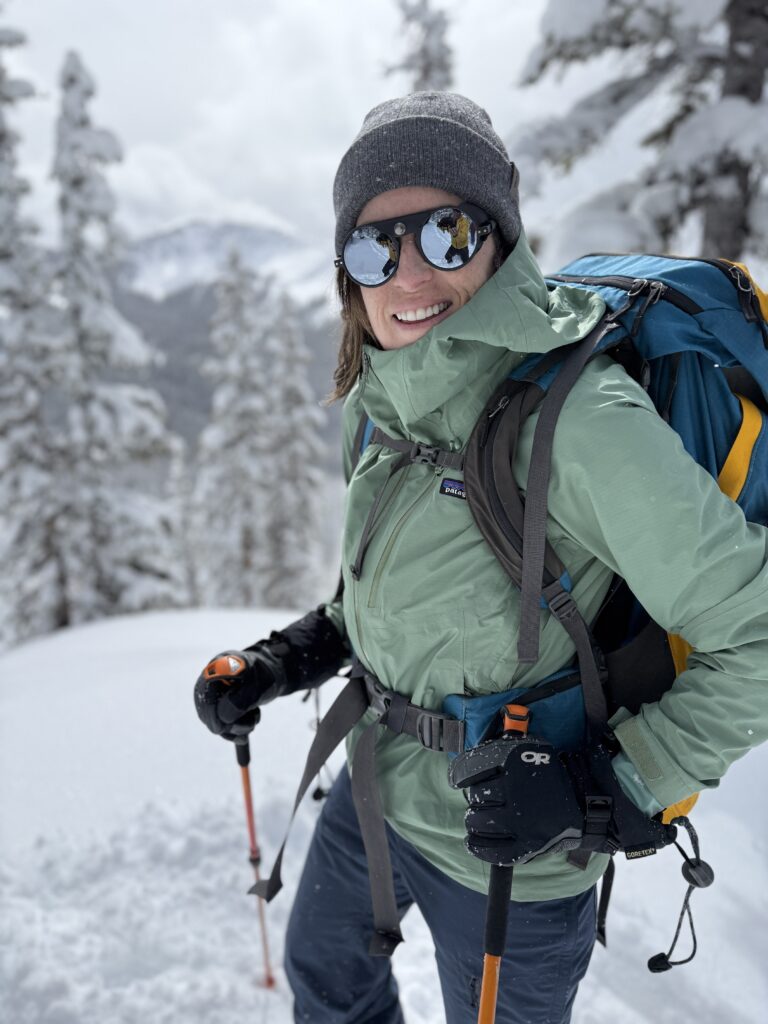
An interview with Devon Cone, Continue Climbing
Please tell me a little about your background.
My name is Devon Cone and I have spent more than two decades working in international humanitarian assistance, policy, and advocacy, focusing on refugees, women’s rights, and global displacement. I lived in several countries while working for the United Nations and was living in Greece when I was diagnosed with young-onset Parkinson’s disease in 2016. Since then, I have continued working in refugee policy and advocacy, I moved to Colorado, and I recently shared publicly that I have Parkinson’s. Now that people know I have this disease, I am opening up a new chapter of advocacy centered on resilience, awareness, and living fully.
Can you tell me more about your Advocacy?
My advocacy bridges two worlds: the professional advocacy I’ve done for vulnerable communities globally, and my personal advocacy as someone living with Parkinson’s. Through my platform, Continue Climbing, I am sharing my honest perspectives navigating Parkinson’s while encouraging others––and myself–– to keep pursuing purpose, adventure, and joy.
What is your passion and how did you get involved in Parkinson’s awareness and hope for a cure?
My passion has always been helping people whose voices are often overlooked. After my diagnosis, I realized people with Parkinson’s––especially those with young-onset Parkinson’s disease––also need stronger representation, more public understanding, and more urgency around research funding. When I was diagnosed in my mid 30s, I didn’t seem to find anyone like me, and that was really lonely. I also felt like I couldn’t tell people because it would jeopardize my career. Now that I am public about my journey with Parkinson’s, I am inspired to use my voice in a new way and help other young women like me feel less alone.
What type of goals do individuals with Parkinson’s have when seeing your Advocacy?
Many people want reassurance that life does not end with a diagnosis––I know I did and I still do. They want to stay active, maintain independence, preserve identity, and see examples of others continuing to live meaningful lives. I hope that by seeing my experiences and my advocacy, people with Parkinson’s will be more encouraged to go after the goals they have set, despite how challenging accomplishing those goals might be while living with Parkinson’s disease.
What effect can your Advocacy have on an individual with Parkinson’s?
I hope my advocacy can give people hope, courage, and a sense of possibility. If someone sees that I continue to work, travel, hike mountains, and engage fully in life, they may believe they can continue climbing and keep doing what they love too.
What would you like to see as a future goal for your Advocacy?
I’d like to see broader access to care, easier access to health insurance and disability insurance, increased research funding, and more honest conversations about what it means to live well with Parkinson’s. I also want younger, single, working people with Parkinson’s to know they are not invisible.
What events do you participate in?
I am just beginning to engage with events related to Parkinson’s. I have participated in several walks, a fundraising climbing trip to Guatemala, the Parkinson’s Policy Forum that takes place yearly in Washington, D.C., and several other awareness raising campaigns including work with the PMD Alliance, the Davis Phinney Foundation, and the Michael J. Fox Foundation.
How does this also assist the caregivers?
Caregivers carry a real emotional and sometimes physical load. Advocacy helps by offering education, reducing stigma, and showing families that support, adaptation, and hope are available. My boyfriend has been wonderful throughout my experience with Parkinson’s disease, especially because when I was diagnosed, we had no idea what to expect. And although neither of us think of him as a caregiver at this point, we are grateful that there are resources out there to help caregivers. We are also so thankful that a lot of people are engaged in advocacy to try and make living with this disease easier and ultimately find a cure.
How can someone get in touch? What is your website?
People can connect with me through my website, www.continueclimbing.com and also through social media channels of the same name (IG: @continueclimbing, TikTok: @continueclimbing, YouTube: @continueclimbing). This website is where I share writing, reflections, and resources about living with Parkinson’s. People can also reach out to me directly at devon@continueclimbing.com.
Website: www.continueclimbing.com
Instagram: @continueclimbing
TikTok: @continueclimbing
YouTube: @continueclimbing
How can others also become advocates for awareness?
If you yourself have Parkinson’s disease, I would start by doing your best to accept the diagnosis. It took me a long time to accept that I have this disease, indeed, many years. And although I think people with Parkinson’s disease need to somehow accept the reality, I think it is also really important for people to share their diagnosis on their own timeframe in their own way. So, I would start by listening and learning, and then, only when you are ready and willing, speaking openly about Parkinson’s. You can support research, attend events, share stories, and use whatever platform you have—large or small—to create awareness.
If you could add any questions to this interview that you may want others to learn about, what would the question(s) be?
I would ask: “How can we better support younger people diagnosed with Parkinson’s?” and “What does thriving—not just surviving—look like after diagnosis?”
In your opinion, what is the key to effective advocacy?
Credibility, persistence, and humanity. Facts matter, but stories move people to care and act.
How can we better fundraise to support a cure for Parkinson’s?
We need to connect science with personal stories, so people understand both the urgency and the hope. Fundraising works best when people feel emotionally invested in the possibility of change.
What other activities do you undertake to help improve and support your daily living Eg exercise and alternative remedies?
To be honest, even before I was diagnosed with Parkinson’s disease my life was very active, full of movement, and valued exercise––so thankfully, I didn’t really have to change much. I just continued being me and doing what I love which I think has helped me be as functional as I can in the face of this disease. So, I work, travel, hike, ski, jog, walk, do my best to stay active in the mountains of Colorado, and try to get outside as much as I can.
Why should people who don’t have Parkinson’s care about this?
Because Parkinson’s affects millions of families, not just individuals. And because how we respond to illness says a lot about our compassion, priorities, commitment to medical progress, and commitment to society’s well-being. Also, it is a rapidly growing disease, and it can happen to anyone. Believe me, when I was 35 years old, never in a million years would I have thought I would be told that I had Parkinson’s disease. It doesn’t just happen to “other people.”
Have you had any family members or relatives affected by Parkinson’s disease?
No, no one in my immediate family or close relatives has been affected by Parkinson’s disease. However, I have recently learned that a distant cousin, quite a bit older than me also has it.
If you had one song that would tell us more about you or represent your life, which song would it be?
“The Mountain Is You” by Chance Peña. This song represents me because my greatest challenges have often come from within—fear, doubt, embarrassment, and learning to adapt after my Parkinson’s diagnosis and its associated symptoms. Its message reminds me that growth comes from continuing the climb, facing myself honestly, and finding strength through resilience.
If you had one final statement or quote you could leave for the Parkinson’s community, what would it be?
Parkinson’s may change the path, but it does not define your life or potential. Continue climbing.
_____________________________________________________
TogetherForSharon® In memory of my mother, Sharon to voice awareness & hope for a Parkinson’s Disease cure. Sharon’s Son, George
Support https://www.togetherforsharon.com/shop/
Would you like to share your journey! Reach out and together our Voices are so much STRONGER!