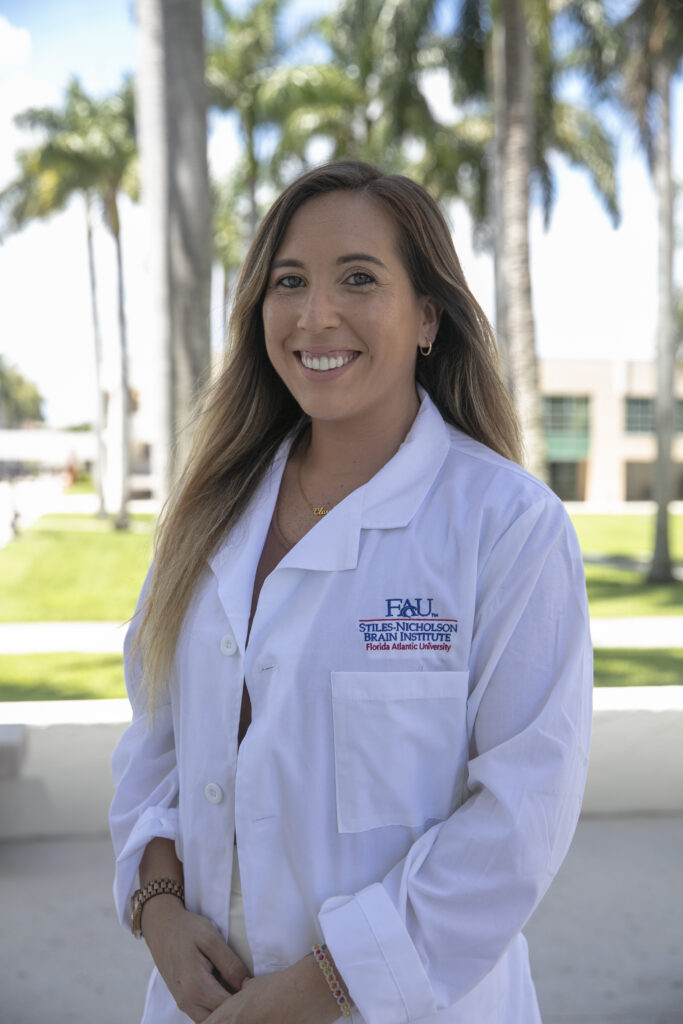
An interview with Claudia Alvarez, The Curious Neuroscientist with a Multi-dimensional Perspective
Biography
I was born in Lima, Peru and raised in South Florida, where I grew up interested by art, movement, and collaboration. I moved to Virginia for college after being recruited to play soccer, originally majoring in Psychology. After experiencing three brain injuries, I became deeply curious about how the brain adapts and recovers. That curiosity led me to pursue a Bachelor of Science in Psychology and Behavioral Neuroscience at Randolph‑Macon College, where I conducted early research on stress and the brain and completed a clinical internship studying volumetric changes after traumatic brain injury.
Before returning for my PhD, I worked as a Clinical Research Coordinator investigating oculomotor biomarkers of mild cognitive impairment. Leading participant recruitment, technician training, and multi‑site data collection exposed me to patterns across patient populations that science had not yet fully explained. That experience solidified my decision to pursue a doctorate so I could help answer those questions.
I am now a Neuroscience PhD Candidate at Florida Atlantic University’s Stiles Nicholson Brain Institute. My resiliency was tested again during my third year, when I developed an anaphylactic allergy to the triple‑transgenic mouse model I had spent over a year developing. During this time, my work focused on peripheral factors such as cathepsin B & L in exercise‑induced neurogenesis and Alzheimer’s disease. Despite the hardship, I wasn’t ready to give up yet. My curiosity remained as strong, and thanks to the support from mentors at FAU, I was able to transition to my current research, which centers on multisensory processing, specifically how vestibular and auditory systems interact with cognition to shape motor and non‑motor symptoms in Parkinson’s disease. My dissertation uses a multi‑dimensional clinical approach that includes audiometry, videonystagmography, AI‑based gait and balance assessments, cognitive testing, and patient‑reported outcomes. Competitive grant funding has allowed me to expand this work to individuals with mild cognitive impairment, supporting my broader goal of improving early detection and interdisciplinary care.
Education and community engagement are equally important to me. I’ve served as a Teaching Assistant and guest lecturer for undergraduate and graduate neuroscience, psychology, and scientific writing courses, and I co‑lead Dissertation Writing Workshops at FAU. Through the ASCEND Graduate Fellowship, I’ve supported neuroscience outreach for middle‑school students, created educational media, and participated in community events such as Brainy Days.
Can you tell me more about your Advocacy?
My advocacy centers on improving awareness, early detection, and interdisciplinary care for everyone. I focus on educating communities, clinicians, and caregivers about the role of multisensory systems, hearing, balance, and cognition, in symptom presentation across neurological diseases and disorders, and their contribution to increased fall risk. Through research, outreach, and public education, I aim to bridge the gap between scientific discovery and real‑world patient needs.
What is your passion and how did you get involved in Parkinson’s awareness and hope for a cure?
I’m passionate about advancing our understanding of the brain and the broader human experience. By promoting brain health across the lifespan. From healthy cognitive development to aging, I hope to help bridge the gaps that still exist in our scientific understanding.
My connection to the Parkinson’s community grew directly from my research experience. Working with individuals with PD gave me the opportunity to hear their stories, appreciate their differences, and recognize the shared resilience that defines this community. I also saw how often sensory symptoms were overlooked or misunderstood, and that realization motivated me to pursue research that could meaningfully improve quality of life.
My involvement deepened through collaborations with the Parkinson’s Foundation, where I now help develop educational content and engage with the community through outreach events like Moving Day. These experiences continue to reinforce my commitment to advocacy, education, and research that supports earlier detection, better care, and a more informed understanding of PD.
What type of goals does individuals with Parkinson’s have when working with you?
Most individuals I work with are looking for understanding, support, and clear direction. They want to make sense of their unique clinical presentation while also recognizing the shared resilience that so many people with Parkinson’s demonstrate as they adapt and build strategies to maintain a good quality of life. Their goals often focus on improving safety, reducing fall risk, and above all, preserving independence. Many are also motivated by the hope of helping others such as by participating in research so future generations can benefit from what we learn today.
What type of training and how long are the programs?
My programs vary depending on the setting. Educational workshops or research-related presentations typically run 45–60 minutes, while research participation involves structured clinical assessments during their 90-minute visit.
What effect can your Advocacy have on an individual with Parkinson’s?
Advocacy can empower individuals through knowledge, helping them feel seen, and better understand what they’re experiencing. When people recognize symptoms earlier, they’re able to ask informed questions and access the care they need. This foundation of understanding supports their independence and reduces fear by offering clear explanations and evidence‑based strategies for managing sensory and cognitive changes.
What would you like to see as a future goal for your Advocacy?
I hope to expand multisensory screening as a standard part of cognitive healthcare nationwide. My long‑term goal is to help integrate hearing, vestibular, and cognitive assessments into routine clinical practice to support earlier detection and personalized treatment. I would also love to expand these applications into studies of understanding development as well.
What events do you participate in?
In addition to my participation in the Parkinson’s Foundation Moving Day events, I volunteer in the FAU Brainy Days community outreach events, I present at academic conferences, support group talks, and educational workshops for clinicians and students.
How does this also assist the caregivers?
Caregivers gain a clearer understanding of the sensory and cognitive challenges their loved one’s face. Because my goal is always to support the individual’s independence, this can help alleviate, or at least delay, the onset of caregiver burden. With better insight and preventative strategies, caregivers are more equipped to support daily activities, reduce fall risk, and communicate effectively with healthcare providers.
How can someone get in touch? What is your website?
I can be reached at Claudiaalvar2021@fau.edu or through LinkedIn: claudia-alvarez-132946159/. I also have an Instagram: @Oscarsmom27
How can others also become advocates for awareness?
Start by learning, listening, and showing up. Advocacy begins with understanding, both the science and the lived experiences of people with Parkinson’s. Share evidence‑based information, encourage preventative habits, and hold your loved ones accountable not for perfection but for progress, because every small step matters when it comes to brain health. Attend community events, volunteer with organizations, share educational resources, and amplify the voices of people living with Parkinson’s. When more people engage, awareness grows, and meaningful change becomes possible.
In your opinion what is the key to effective advocacy?
Consistency, compassion, and communication. Advocacy is most powerful when it is informed by science and grounded in real human experience.
How can we better fundraise to support a cure for Parkinson’s?
By connecting research to real stories. People give support when they understand the impact. Community‑based events, partnerships with local businesses, and transparent communication about research goals all strengthen fundraising efforts.
What other activities do you undertake to help improve and support your daily living Eg exercise and alternative remedies?
I prioritize movement and creativity in my weekly routine. For me, exercise can be anything from stretching and walking to strength training and balance‑focused activities, anything that keeps my body engaged and connected. Creativity also shows up in different forms too, whether I’m painting, writing, or developing educational content.
I also practice mindfulness and constantly remind myself to slow down. In a world that moves quickly, it’s easy to lose touch with the present moment, which can lead to stress and disconnect. Slowing down helps me appreciate the small moments that make up the human experience, and practicing gratitude reinforces neural pathways that support positive thinking.
To sustain all of this, I maintain routines that support cognitive health, including structured planning, consistent sleep hygiene, and intentional time for rest and reflection.
Why should people who don’t have Parkinson’s care about this?
Because PD affects families, communities, and future generations, it deserves everyone’s attention, not only those directly impacted. Human conditions reflect the broader human experience, and this perspective reminds us that we don’t need to be personally affected by a disease to care deeply about one another. Neurological disorders & diseases do not exist in isolation; their ripple effects span across communities. Advocacy today helps build a more informed, compassionate, and prepared society for tomorrow.
Have you had any family members or relatives affected by Parkinson’s disease?
I have not had immediate family of friends affected by PD.
If you had one song that would tell us more about you or represent your life, which song would it be?
Life Boat by RAYE for a serious tone & Little Alien by Kelly Boesch on a lighter and fun note
If you had one final statement or quote you could leave for the Parkinson’s community, what would it be?
“Your strength is not defined by your labels, but by the courage and resiliency you show every day. Science is moving forward, and so are we.”
_____________________________________________
TogetherForSharon® In memory of my mother, Sharon to voice awareness & hope for a Parkinson’s Disease cure. Sharon’s Son, George
Support https://www.togetherforsharon.com/shop/
Would you like to share your journey! Reach out and together our Voices are so much STRONGER!