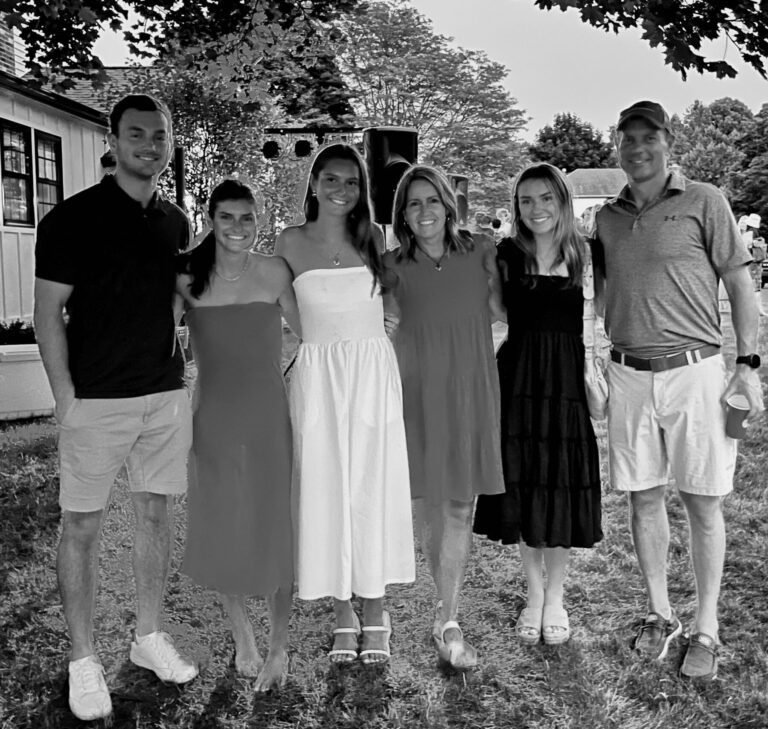
An interview with Mike Mooney, Resetting Hope: Turning a Parkinson’s Diagnosis Into Advocacy.
Please tell me a little about your background.
I am a husband, father of four, entrepreneur, and Parkinson’s advocate from Pittsford, New York. After being diagnosed with Parkinson’s in 2020, I became committed not only to managing my own condition, but also to helping accelerate better options for others.
Can you tell me more about your Advocacy?
My advocacy spans policy, patient storytelling, and innovation. I speak with lawmakers, connect with researchers and nonprofit leaders, and write publicly as ‘Doc Irish’ while also building Brain Storm, a multisensory neurorehabilitation platform designed to complement traditional care.
What is your passion and how did you get involved in Parkinson’s awareness and hope for a cure?
My passion comes from living this every day and wanting something better for the Parkinson’s community than simply accepting decline. I got involved because I realized patients and families need both a stronger push for a cure and more support for approaches that can improve function and quality of life right now.
What type of goals do individuals with Parkinson’s have when seeing your Advocacy?
I hope people see that they can still lead, build, advocate, and contribute after diagnosis. I want them to feel informed, encouraged, and empowered to pursue hope, research, movement, community, and new possibilities.
What type of training and how long are the programs?
My advocacy itself is ongoing, but the work I support emphasizes practical, repeatable habits like exercise, sensory engagement, education, and community connection. On the innovation side, I am interested in structured training programs that can be delivered in short, repeat sessions over weeks and then adapted to individual needs.
What effect can your Advocacy have on an individual with Parkinson’s?
Advocacy can replace isolation with momentum. At its best, it helps people feel seen, educates them about options, and reminds them that their voice matters in shaping research, care, and public awareness.
What would you like to see as a future goal for your Advocacy?
My future goal is to help move advocacy beyond awareness alone and toward action – better funding, broader research, and faster translation of promising ideas into real-world help for patients. I also want to build stronger bridges among patients, clinicians, scientists, engineers, and policymakers.
What events do you participate in?
I participate in events such as the Parkinson’s Policy Forum, advocacy meetings with elected officials, community awareness efforts, and conversations with researchers and nonprofit leaders. I also take part in writing, speaking, and outreach opportunities that help keep Parkinson’s visible to a broader audience.
How does this also assist the caregivers?
Good advocacy helps caregivers feel less alone and gives them language, resources, and community. It also pushes for better treatments and support systems, which ultimately reduces burden on the people who love and care for us.
How can someone get in touch? What is your website?
People can get in touch with me through Brain Storm Studios. The website is www.thebrainstormstudios.com. Or https://parkinsonsnewstoday.com/the-impatient-patient-doc-irish/
How can others also become advocates for awareness?
Start by sharing your story, supporting organizations doing meaningful work, and reaching out to lawmakers, researchers, and local communities. Advocacy does not have to be huge to matter – consistency, authenticity, and showing up make a real difference.
If you could add any questions to this interview that you may want others to learn about, what would the question(s) be?
One question I would add is: How can innovation in rehabilitation and adaptive signaling complement the search for a cure? Another is: How do we help people with Parkinson’s maintain identity, agency, and purpose after diagnosis?
In your opinion, what is the key to effective advocacy?
The key is credibility joined with persistence. When advocacy is personal, informed, collaborative, and sustained over time, it has the power to move people from sympathy to action.
How can we better fundraise to support a cure for Parkinson’s?
We need to connect Parkinson’s to issues the public already understands – aging, toxic exposures, veterans’ health, caregiver burden, and the economic cost of disability. Fundraising improves when we tell human stories clearly, show measurable impact, and invite people to support both breakthrough science and practical solutions that improve lives now.
What other activities do you undertake to help improve and support your daily living Eg exercise and alternative remedies?
Exercise is a major part of how I support my daily living, along with trying to stay engaged mentally, socially, and purposefully. I also pay close attention to sleep, stress, routines, and complementary strategies that may help me function as well as possible day to day.
Why should people who don’t have Parkinson’s care about this?
Because Parkinson’s affects families, workplaces, healthcare systems, and communities – not just the person with the diagnosis. It is also a window into broader questions about brain health, aging, environmental risk, and how we care for one another.
Have you had any family members or relatives affected by Parkinson’s disease?
I am the person in my family who has been directly affected by Parkinson’s, and that diagnosis has affected all of us. My family has lived this journey with me in a very real way.
If you had one song that would tell us more about you or represent your life, which song would it be?
I’d choose ‘I Won’t Back Down’ by Tom Petty because Parkinson’s demands resilience, and advocacy requires the same thing. It captures the spirit of pushing forward even when the road gets hard.
If you had one final statement or quote you could leave for the Parkinson’s community, what would it be?
Parkinson’s may change the path, but it does not erase the person. We need more courage, more collaboration, and more urgency, because people living with Parkinson’s cannot afford for hope to move slowly.
TogetherForSharon® In memory of my mother, Sharon to voice awareness & hope for a Parkinson’s Disease cure. Sharon’s Son, George
Support https://www.togetherforsharon.com/shop/
Would you like to share your journey! Reach out and together our Voices are so much STRONGER!