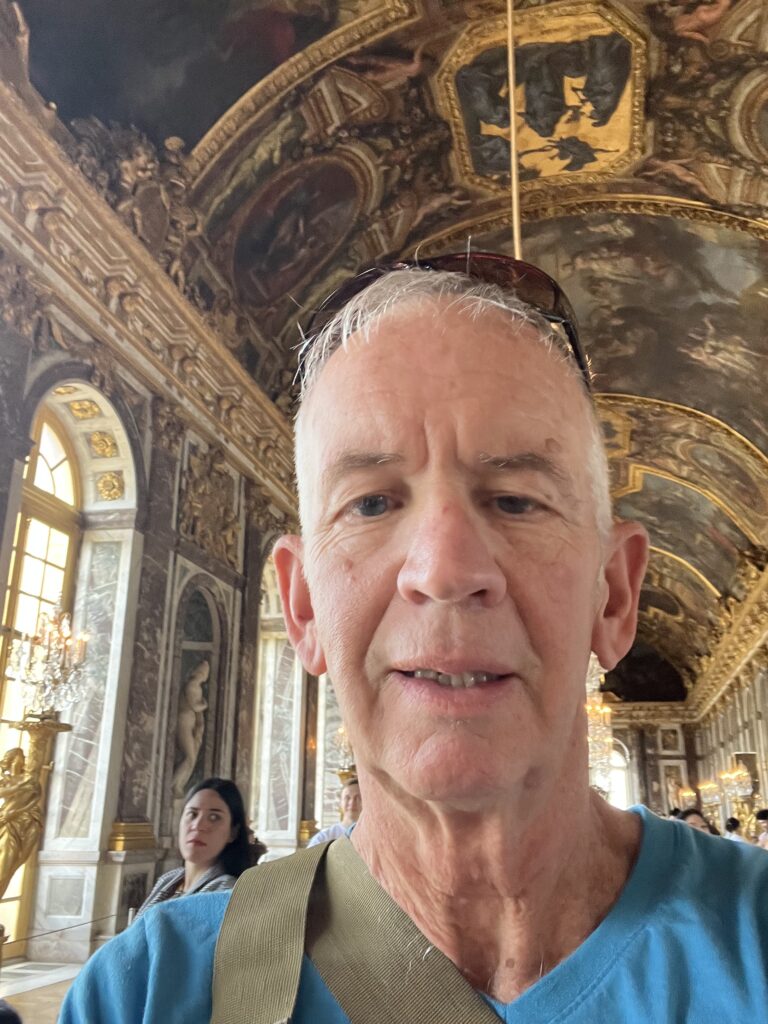
An interview with Cal Hultquist: Kicking & Screaming: Martial Arts Therapy
Please tell me a little about your background.
I am a former government, law enforcement and court appointed investigator. BA from University of Illinois and a JD from Indiana University School of Law. My father died in my arms from Parkinson’s complications. I was diagnosed 3 years ago at age 62. I immediately figured out that exercise was key to having a chance at a decent life, even with PD, so I joined Level 10 Martial Arts College and am now graduated to a red belt and preparing for my black belt.
Can you tell me more about your Advocacy?
After reaching out to various groups on FB for PWPs I realized that I was not unique and we PWPs share much in common. There are the fighters and those who can no longer fight or have lost hope. The purpose of my advocacy is to encourage people to fight and to enlighten fellow PWPs that there is hope and that through vigorous exercise, their physical condition, including movement, strength building, coordination and balance could improve. We do not have to just accept our diagnosis only – we can fight. I also write poetry and songs that address the difficulties and hope for a better future for people with Parkinson’s.
What is your passion and how did you get involved in Parkinson’s awareness and hope for a cure?
Having watched my father suffer and die from PD and the loss of hope I realized that the psychology of hope was critical to longevity and quality of life and once that hope is gone, the end becomes expediated and ugly. So, I encourage hope and strength whenever I can.
What type of goals does individuals with Parkinson’s have when working with you?
I do not per se work with people. I correspond and publish FB posts addressing life with PD or how martial arts has improved my health. Truly martial arts could be interchanged with dancing, boxing, Pilates, or any other whole body exercise that promotes strength, balance and coordination. I find that team sports are easier because it adds motivation when your team is counting on you and you’re less likely to make excuses for not exercising.
What type of training and how long are the programs?
Of course, you can participate and even compete in martial arts well into your 80’s if your health holds out. The key is finding the right school or program that will accommodate physical challenges or limitations.
What effect can your Advocacy have on an individual with Parkinson’s?
Hopefully, people I try to help find motivation and encouragement. For example, I have published articles under the Parkinson’s Tourist, demonstrating how I navigated Paris, the French Riviera, Spain and Panama with my PD limitations. This encouraged a lot of people with PD to try to travel using my tips and stimulated a lot of conversations and sharing of tips.
What would you like to see as a future goal for your Advocacy?
Eventually I would see recruiting karate schools to accept and cater to people with physical limitations and to do programs similar to existing boxing programs but offering an alternative.
What events do you participate in?
I attend practices 5x per week and spar Saturdays or compete at tournaments.
How does this also assist the caregivers?
Caregivers don’t necessarily benefit directly but frequently loved ones want to cushion and protect their loved ones so everything is done with caution. The problem is it creates invisible barriers to recovery. You will not achieve more than you believe you can. Understanding that you can have PD but not be disabled is important to extending quality and quantity of life with Parkinson’s.
How can someone get in touch? What is your website?
YouTube @calhultquist1714
How can others also become advocates for awareness? Find a physical sport or exercise that works for you and then encourage others to try. Sometimes people don’t even realize the barriers they have built are blocking themselves from a more enjoyable life.
In your opinion what is the key to effective advocacy?
I had to learn that some people have much tougher symptoms than I do or were diagnosed later after more damage had been done and cannot physically do what I do. I learned that I have to be sensitive to those who cannot fight martial arts, bike or kayak like me and be sensitive to their limitations while advocating for other more doable exercises for those hit harder by PD. Once I made someone sad and discouraged because he said he could never do karate – just walking was a challenge so he suggested he just give up hope. So now I make sure to be more sensitive to that.
How can we better fundraise to support a cure for Parkinson’s? I am not sure how to answer this. I probably lack the expertise to reply.
What other activities do you undertake to help improve and support your daily living Eg exercise and alternative remedies?
I keep it simple. Take my meds on a reliable schedule and eat right while exercising some every day and big time at least 2-3x per week.
Why should people who don’t have Parkinson’s care about this?
Because at its rate of growth, everybody already knows someone with PD or they will, and it might just be themselves or someone they love. The odds are not good for an entire family to have zero PD in their circles.
Have you had any family members or relatives affected by Parkinson’s disease?
If you had one song that would tell us more about you or represent your life, which song would it be?
My dad died in my arms from Parkinson’s. It was tough to watch.
If you had one final statement or quote you could leave for the Parkinson’s community, what would it be?
Stand and fight as long as you can and maintain hope at all costs. You can have a happy and interesting life even with PD.
______________________________________
TogetherForSharon® In memory of my mother, Sharon to voice awareness & hope for a Parkinson’s Disease cure. Sharon’s Son, George